Whether you’re stuck staring at the Chapter Three heading of your dissertation or filling out the research methodology section of a DAAD, Chevening, GKS, CSC, or MEXT application, you need the same thing: a clear and practical explanation of how to design your research.
Most guides approach this topic from a British or American academic perspective, which often doesn’t fully match the expectations of Nigerian university departments. This research methodology for beginners guide was written specifically with Nigerian students in mind. It supports both your thesis work and the research proposals required for international scholarship applications.
Methodology Basics: Methodology vs. Methods, the Difference That Matters
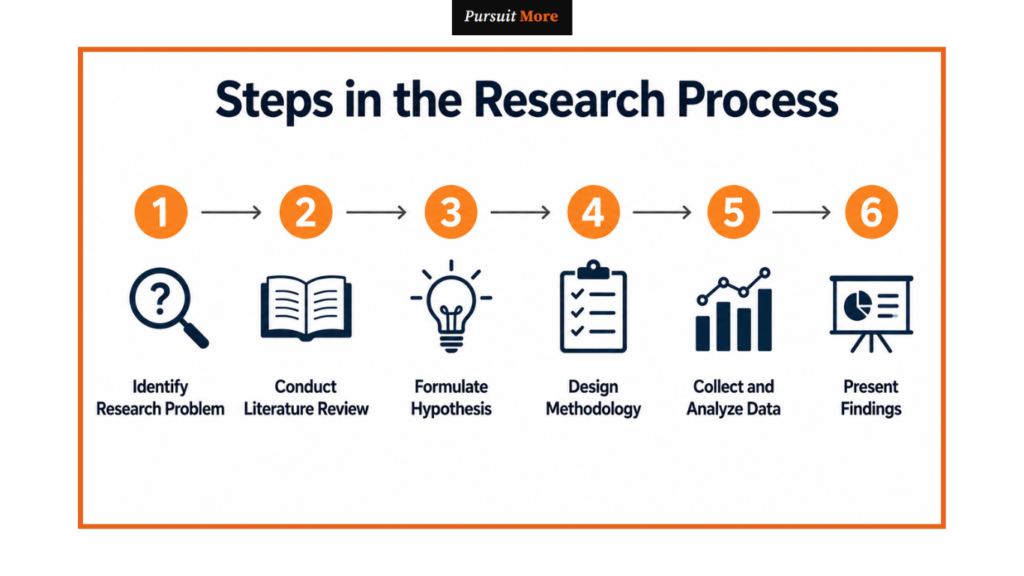
Research methodology for beginners is one of those foundational concepts that is often muddled at the start of a project. Put simply, understanding research methodology for beginners means recognizing that your methodology is your overall research design, which is the overarching approach you take to investigate your research question or hypothesis. Your methods, on the other hand, are the specific techniques you employ to gather and analyse your data.
A core principle of research methodology for beginners is considering your methodology to be your broad mode of transportation, and your methods as the specific vehicles you choose within that class. If your methodology is to “travel overseas,” your methods might be “by boat” or “by plane.” The two should always be clearly delineated when developing a research proposal or funding request, meaning the overall research methodology must be established first, and the specific data collection techniques chosen second.
In any guide to research methodology for beginners, choosing methods first and building a rationale around them retroactively is a major trap that makes your methodology section sound like guesswork. Even if you perform a survey flawlessly, an examiner reviewing a research methodology for beginners framework will wonder why you conducted it that way if there is no strong theoretical or pragmatic rationale given.
Research Methodology for Beginners: Quantitative, Qualitative, or Mixed?
Types of Research Methodology
This section can be the most perplexing, since most research methodology guides in Nigeria stops right around here, giving only vague descriptions of each type of research. It bears further expansion to clarify which type of research is best suited for which type of inquiry and why.
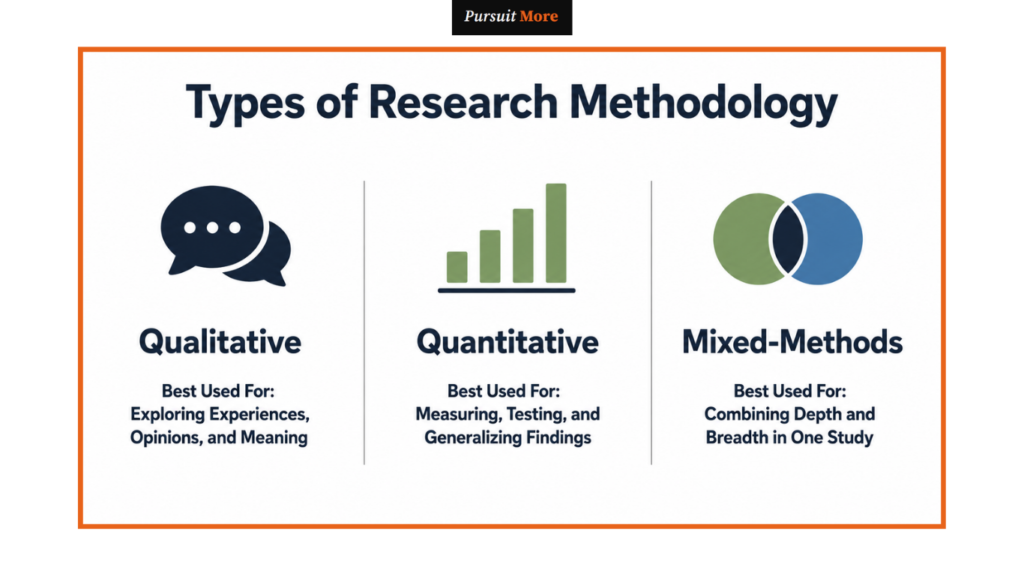
Quantitative research investigates relationships between variables using statistical analysis. It is used to demonstrate correlation between an independent (X) and dependent (Y) variable and, under the right experimental or quasi-experimental design, can support causal claims as well – though most student surveys and cross-sectional designs can only establish correlation, not causation, and should be described accordingly. Surveys and questionnaires, particularly structured ones, are common quantitative methods.
They rely on closed-ended questions, multiple-choice answers, Likert scales, or other easily quantifiable response formats, analysed statistically to reveal patterns, averages, medians, and other figures.
Qualitative research aims to understand phenomena through an in-depth, interpretivist examination of meaning and context. It uses methods such as unstructured and semi-structured interviews and focus groups to gather information, which is usually analysed thematically.
Mixed-methods research, as the name suggests, utilises elements of both quantitative and qualitative research. It is a particularly strong fit for development studies, as it allows the researcher to both measure an effect (quantitative element) and identify why or how this effect occurs (qualitative element). A survey accompanied by interview questions asking about reasons or motivations fits this category.
It is often appropriate for a funding request writing scenario since it allows both a bird’s-eye view of the situation (statistics, averages, etc.) and a granular, individual perspective on the issue (how individual cases affect individual people).
Research Design Decision Matrix
| What sounds like your question… | Is probably best answered by… | Best methods |
| What is the relationship/correlation between X and Y? | Quantitative | Structured surveys/statistical analysis |
| How do people experience/make sense of X? | Qualitative | Interviews/groups, thematic analysis |
| What is happening/happened, and why is it important to this particular community? | Qualitative or mixed methods | Interviews plus supporting survey |
| Does this particular programme/intervention work, and how? | Mixed methods | Quantitative evaluation plus interview |
| I don’t have access to a broad group of people, but I do have access to this smaller group. | Qualitative | Access-based interviews/groups |
| I need to ask a lot of people about this particular issue. | Quantitative | Survey, secondary analysis |
Nigerian Research Methodology Basics: What Your University Might Actually Be Looking For
While most Nigerian university departments have no official stance on this, it is rather common that a majority of departments will subtly favour quantitative, positivist research, both in their teaching of methodology and research supervision practices. This means that while quantitative research proposals and theses are commonplace, qualitative and mixed-methods studies may need to spend extra time justifying their very existence within the department.
This is not to say that qualitative research is unwelcome – far from it! Simply put, you may need to spend more time explaining what you are proposing than your quantitative counterparts – it is important to be prepared for that eventuality and to be able to name-drop the appropriate paradigms in good stead.
In addition, the ability to explain why a particular research design does not fit your needs is a useful skill in its own right and will be handy when you have to defend your design choices to a DAAD, Commonwealth Scholarship, or similar reviewer.
This will vary drastically depending on your field: physical and natural sciences, engineering, and most business programmes are usually the most averse to anything but quantitative research, whereas humanities, mass communication, and development studies programmes are more receptive to qualitative and mixed-methods research.
However, this can vary drastically depending on the individual supervisor’s own qualifications and inclinations. It is a good idea to ask around within your department and to read recent theses to get an idea of what sort of research design is more commonly approved there – the best way to avoid problems later is to do thorough research at this stage.
Other indigenous research methodologies exist, which are appropriate for, and encouraged within, the Nigerian and wider African research environments. The oral tradition is particularly valued as a source of information, and methods have been developed to extract, analyse, and evaluate this information just as quantifiable data might be extracted and analysed elsewhere.
Bagele Chilisa’s work is a good starting point for anyone looking to delve into this area of research – she speaks of the Lekgotla research method, which shares many similarities with the Western “interview” but differs in its focus on data collection and analysis as a single, collective process. Similarly, her Orature Approach views literature review and analysis of findings as similar processes, with oral literature being reviewed and evaluated in much the same way as published works.
The same principles underpin other local methodologies: while data collection methods such as interviews and focus groups are similar to their Western counterparts, sampling is often done differently – in indigenous research, it is common to work with a community leader or elder who can vouch for the suitability of prospective participants. Multi-pronged analysis (looking at oral histories, observed practices, and published works) is similarly common to many local Nigerian methodologies and reflects a form of triangulation grounded in locally appropriate source types.
These methodologies are not a replacement for standard research design – your methodology chapter still needs to have a clearly stated design, sampling strategy, and analysis plan – but they offer viable alternatives within each section to the more commonly-taught Western methodologies. This is a particularly useful skill to have when applying for funding: most scholarships are given to students who demonstrate a comprehensive understanding of the intricacies of their field.
If you are able to identify, explain, and utilise indigenous methodologies appropriately, it will make your application stand out from the crowd. Chilisa’s Indigenous Research Methodologies is a good starting point for exploring this particular research design avenue.
What To Do (And Not To Do) When Writing Your Methodology, With Examples
Before diving into the actual writing of the methodology chapter, it is useful to consider the most common pitfalls and what to avoid when writing it.
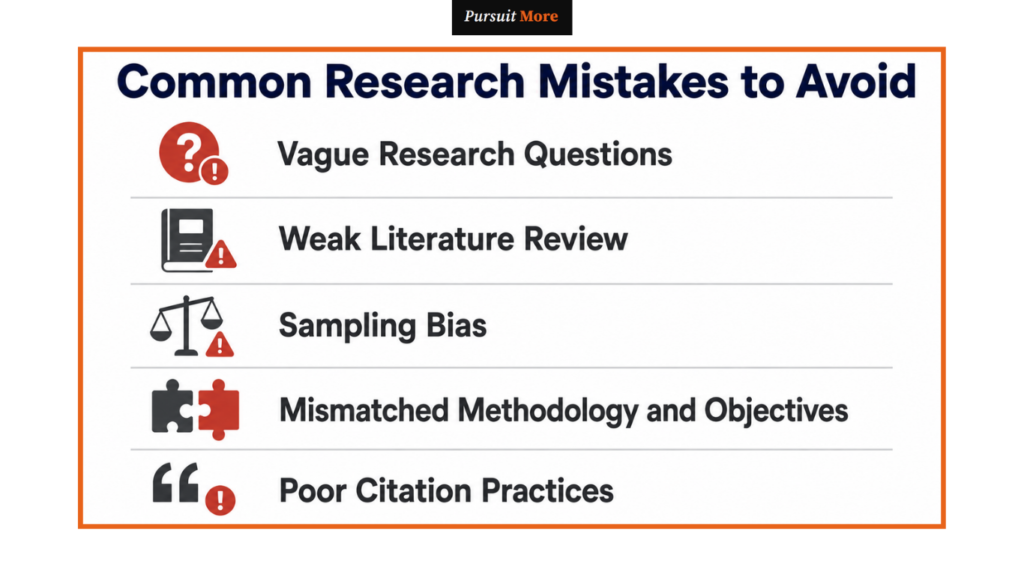
Mixing methods up with methodology. You might know the difference between the two, but an examiner marking your thesis might have trouble distinguishing between the two if you do not make the section clearly structured. If you are using a quantitative research design (structured survey), you might spend several paragraphs extolling the virtues of your questionnaire, never actually mentioning your paradigm or rationale. The best way to avoid this trap is to clearly delineate the sections, perhaps by having a dedicated paragraph or section on each segment of your research design.
Vague analysis strategies. Statements such as “appropriate analysis strategies will be used” or “appropriate statistical analysis will be performed” are vague and may suggest to an examiner that you are not familiar enough with the statistical aspects of your research design. Always be specific when you talk about your analysis strategies: name the specific tests and procedures that you will perform, and briefly explain what they mean for your analysis.
Cut-and-paste research design. You might decide to review a paper that has a good research design section and decide to use it as a template for your own, which is understandable since most people find it difficult to know where to start with the methodology. However, it is important to ensure that whatever section you base your own on is actually appropriate for your own research question.
An examiner might easily become suspicious if you use a survey-based research design to investigate a published work, or vice versa.
Giving a number as justification, not a method. In quantitative analysis, it is not enough to say that “a sample size of 150 will be used.” You must also explain what this number means and how it was determined – was there a statistical basis for this decision, or is it simply a commonly accepted number within your field? Similarly, your qualitative analysis should not simply state that “data saturation has occurred”. Briefly explain what this means within the context of your research design.
Limitations as an add-on or non-existent. Many students choose to omit the limitations section of their research design altogether or write it as a single sentence to get it over with. Both approaches are unadvisable – limitations are best stated clearly and concisely, just as you would describe any other aspect of your research design.
This is, again, good practice in general, since a limitation section as specified above can be useful for a DAAD, Commonwealth Scholarship, or similar application, and doing it properly will give you practice for when you need it most.
How To Write Your Research Methodology By Section, With Examples
Research Design
Begin this section by stating your research design (survey, interviews, focus groups, etc.) and briefly justifying it – what makes it appropriate to your research question? Give a brief rationale about your paradigm, making sure to tie it to your research question.
Population and Sampling
State your population and briefly describe your sampling strategy – what makes it appropriate to your research design? What are your inclusion/exclusion criteria? Describe your sample size (again, giving a rationale, not just a number) in this section.
Data Collection Instruments
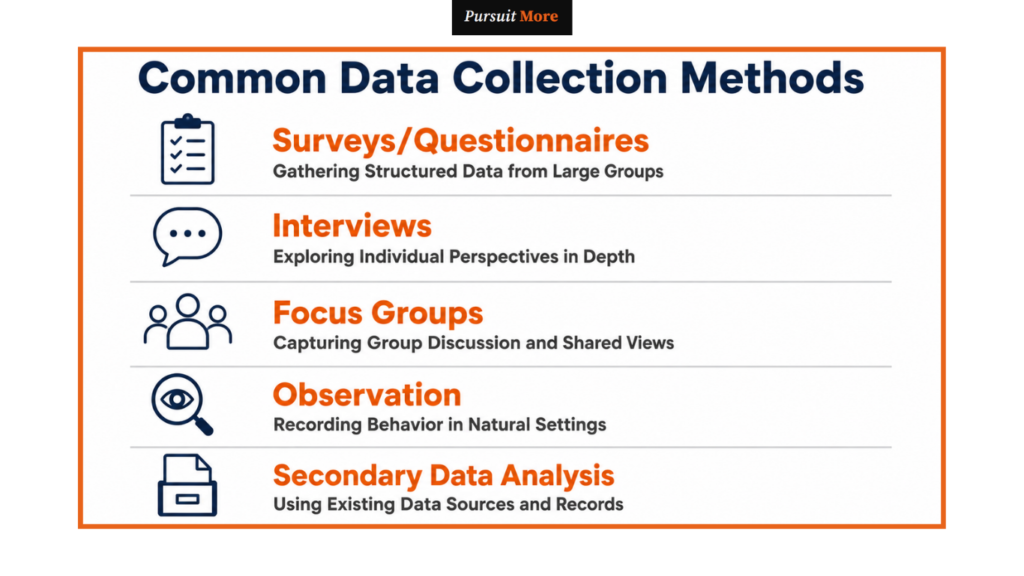
Briefly describe your data collection instruments (questionnaire, interview guide, observation sheet, etc.) and how they were created or chosen.
For quantitative instruments, ensure that you have included questions that can elicit the responses you need for your analysis and that your questions are formatted correctly to do so. For qualitative instruments, describe what you hope to achieve with your research design and how your questions support that goal. If you have used existing instruments as inspiration or as foundations for your own instruments, describe that here as well.
Data analysis approach
Tie this to your design explicitly – statistical tests or software (SPSS, R) for quantitative studies, or a specific method (thematic analysis etc.) for qualitative studies. “The data will be analysed appropriately” is the easiest way to get your chapter thrown back at you by examiners.
Limitations
All methodologies have them; name yours briefly and move on. Vague or overly self-deprecating limitations will make your chapter look less credible to a thesis examiner but also to a scholarship officer evaluating your capacity to complete a study.
Referencing and Citations
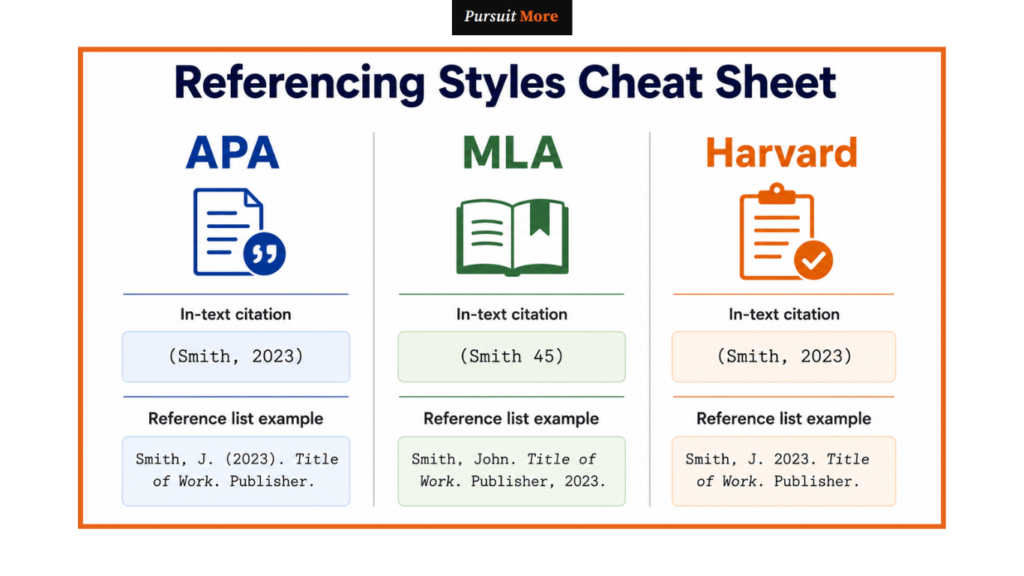
Throughout writing these sections, ensure that your methodology references follow your target institution’s or funding body’s required citation format accurately.
My analysis section would note a specific method like thematic analysis, possibly citing Braun and Clarke’s six-phase approach, instead of simply saying “the data will be analysed appropriately”. My limitations might discuss why a study confined to one local government cannot be generalised to all of Lagos and why those who opted to participate in my study might not speak for those who declined to do so. Each section links to the next while also building on the information in the previous. It is not enough that every part is good in isolation – they have to work together as a whole.
Connecting Your Methodology to a Scholarship Proposal
The ability to put together a methodology section as described above is useful beyond your thesis – it is, in many cases, the most common way a shortlisted scholarship applicant differs from the rest.
For DAAD EPOS, application guidance strongly suggests that generic proposals (“I want to study renewable energy in Africa”) get rejected immediately – the review panel wants to see specific methodologies, realistic timelines, and results. GKS (Global Korea Scholarship) applicants know that when asked to prepare a separate research proposal, many successful applicants and guides advise that the document has significant weight in the review process – the scholarship officers want to see that the research is viable within Korea’s institutional settings.
CSC (Commonwealth Scholarship) applicants for PhD study must secure a supporting statement from a UK-based supervisor confirming that they can supervise the proposed methodology within the 36-month scholarship duration.
In other words, your methodology has to convince a working academic to take on a student, in addition to passing muster with the scholarship review panel. Finally, MEXT applicants are asked to prepare a Field of Study and Research Program Plan as part of the application, one that many successful applicants and guides agree is the most important document in the application. It has to convince the MEXT review panel that your research plans are realistic, without overcommitting to any single university or department. It is, in short, another methodology section, with very tight word limits.
The exception is the Chevening scholarship, which does not require any formal research proposal or methodology section. The only written components are four essays on leadership and career-related topics. However, the ability to structure a specific research proposal benefits the other essays in general, on similar grounds.
The same line of thinking applies outside of government scholarships as well. Harvard PhD and postdoc applicants are graded heavily on their research statement component of the application, and admitting committees use methodological clarity as their proxy for research readiness: so an applicant’s vague statement of research interest (“I want to study X”) is evaluated against this metric with equal scrutiny as a DAAD panel would apply.
Applicants who can state their paradigm, justify their sampling/data strategy, and speak of analysis methods specifically tend to stand out for not having done this at all, since few applicants go into this level of detail at the statement level. In other words, the methodology skills you build for a Nigerian Chapter Three can be transposed verbatim to a Harvard research statement, as they’re the same discipline applied at a much-compressed length.
Beyond Academia: Methodology as a Career Skill
This skill also has value beyond a formal application – there are jobs requiring this skill in Nigeria besides university academia. Moniepoint, the fintech company, has several research roles with clear interest in qualitative and mixed methods research, which is very similar to what one would do when preparing a dissertation.
New Incentives, a Nigerian health development organisation, also has openings for research and monitoring, and evaluation roles. Rhizome Consulting frequently lists positions for researchers and analysts. In short, it is possible to turn this skill into a career besides academic research.
The Bottom Line
Methods are not methodology, and knowing the difference is critical to avoid the most common traps in Chapter Three. Know the default for your department (quantitative or qualitative) and avoid proposing something outside it unless you’ve clearly stated why it is a good fit. Indigenous methodologies are appropriate when relevant; with proper citations, they are a methodology, not an informal research style.
Fit your data analysis, instrumentation, design, and sample together and tie them to your research question, not to vague goals. And when in doubt, remember that the people who will read your methodology are often people who have written methodology sections themselves. Tthe officers reviewing it often have a good idea what to look for.
Your methodology section and scholarship research proposal are two of the most important documents in your scholarship application, period. If you want help reviewing your research methodology or scholarship research proposal before submission, a full application audit is an option.
This guide has focused on the most important parts for scholarship applications, but a live view of all currently open scholarships can be found on the opportunities page. Looking for a real-life example of the methodology section in action? The MSc journey page details one person’s path through obtaining a Nigerian undergraduate degree, doing research, and getting a full masters scholarship abroad.
Next Steps for Your Application & Career
- Applying for German Funding? Download our research proposal blueprint in the DAAD Scholarship 2026: Nigerian Application Guide + Proposal Template.
- Targeting Top US Universities? Read our Harvard Scholarships for Nigerians 2026: Full-Ride Guide to see how to adapt your research statement for elite admission committees.
- Looking to European Fully Funded Masters? Check out the Erasmus Mundus 2026: Complete Guide for African Students for details on mobility paths and research statements.
- Transitioning Research to Industry? Discover roles and salary expectations in the Fintech & Tech Jobs in Africa 2026: Ultimate Salary & Career Guide.