DAAD Scholarship 2026: The Nigerian Application Guide + Template
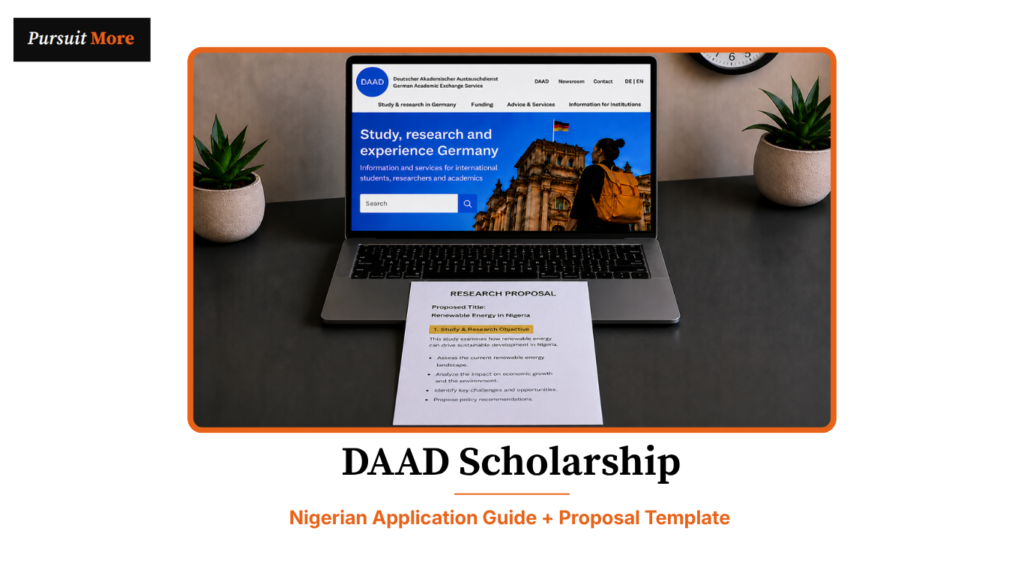
Two things kill most eligible Nigerian applicants for a DAAD scholarship: the portal navigation process and the research proposal—the single most important part of the application that few know how to handle.
To help you overcome these hurdles, this guide outlines the essential DAAD scholarship requirements for Nigerian students wanting to submit a winning application for a fully funded master’s degree in Germany.
DAAD Scholarship for Nigerian Students: Who Qualifies and What Does It Cover?
DAAD is the German Academic Exchange Service, the organisation responsible for providing funding for over 100,000 students and researchers from different countries studying or doing research in Germany every year, with an annual budget exceeding €700 million.
The most popular scholarship for working-age Nigerian students is the EPOS scholarship, meant for postgraduate studies. EPOS is a DAAD brand that caters to the needs of professionals with at least two years of working experience, so fresh graduate students are highly unlikely to qualify.
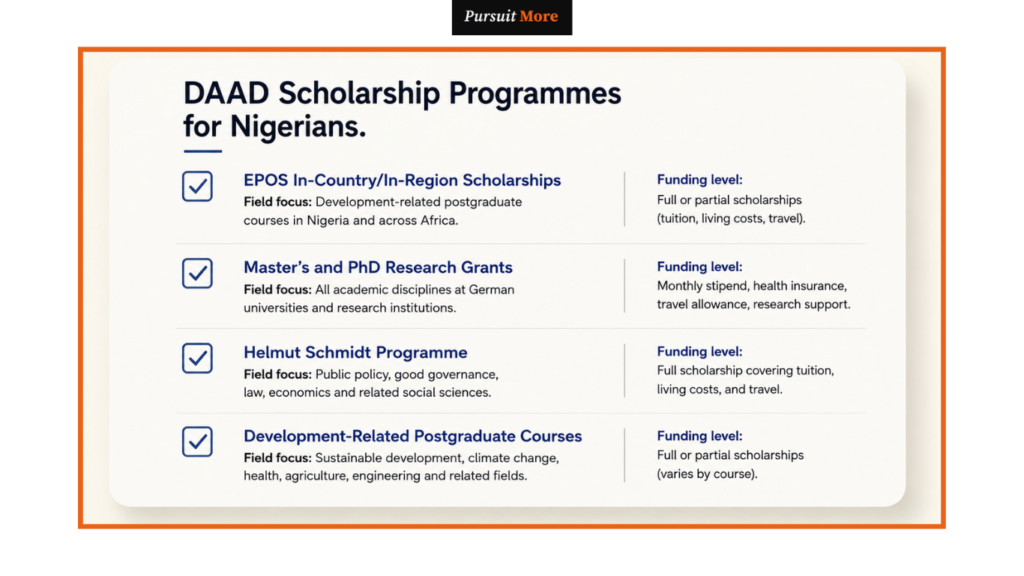
A few requirements are mandatory for everybody who wants to apply for an EPOS scholarship:
- First of all, you have to have a bachelor’s degree from a recognized educational institution, which you graduated from on good terms (upper third class honors)
- You also have to have at least two years of working experience in the field you are applying for, preferably in the development sector
- EPOS values the applicants that has a clear vision of how they can contribute to the development sector in Nigeria or the whole region after they finish their studies
- Less than 15 months of legal residence in Germany is required
The scholarship covers the tuition fees (which are completely waived for international students in German Universities with a small fee of 150-350 EUR per semester), a monthly stipend of 992 EUR for master’s degree students and 1400 EUR for PhD students (increased by 100 EUR in February 2026), accident, health, and personal liability insurance, and a travel allowance.
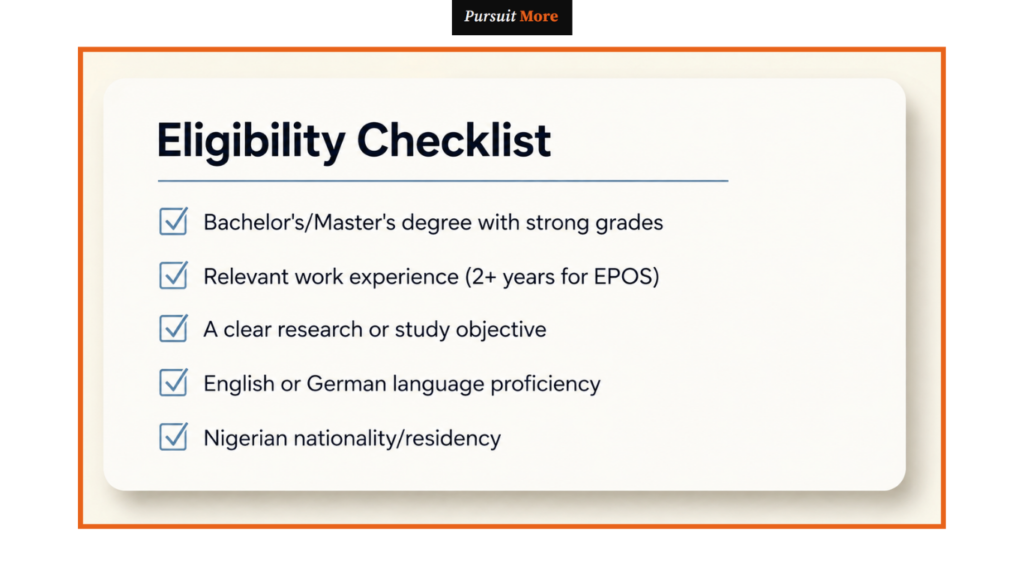
Key Dates: Deadlines for DAAD Scholarships Are Not Set in Stone
This is one area where guides and generic advice online do not sufficiently address the Nigerian context, as most deadlines for DAAD scholarships are flexible and depend on the university at which the applicant wishes to study. For example, most programmes have October-February deadlines for an April or September start, but every university has its own requirements and timeline.
Therefore, an approximate timeline to consider is provided below:
- 12-18 Months before your intended start: Choose the area you want to study and the degree level you are interested in, and search for options on DAAD’s scholarship database.
- 8-10 months before: Ensure that your documents are in order and their legalization procedures, if any. Align with the guidelines provided below in the Nigeria-specific requirements section.
- 6–8 months: Finalise your research proposal, secure the required references, and submit your preliminary application (see the Application Process section below).
- After being shortlisted: Initiate the visa application process as a student in Germany; you will be required to open a blocked account with a minimum deposit of €11,904 to cover the costs for the duration of your scholarship (as of 2025).
The DAAD scholarship deadline is always explicitly stated on a particular programme’s official call for applications. Always cross-check the stated deadline with the university in question before embarking on the application process.
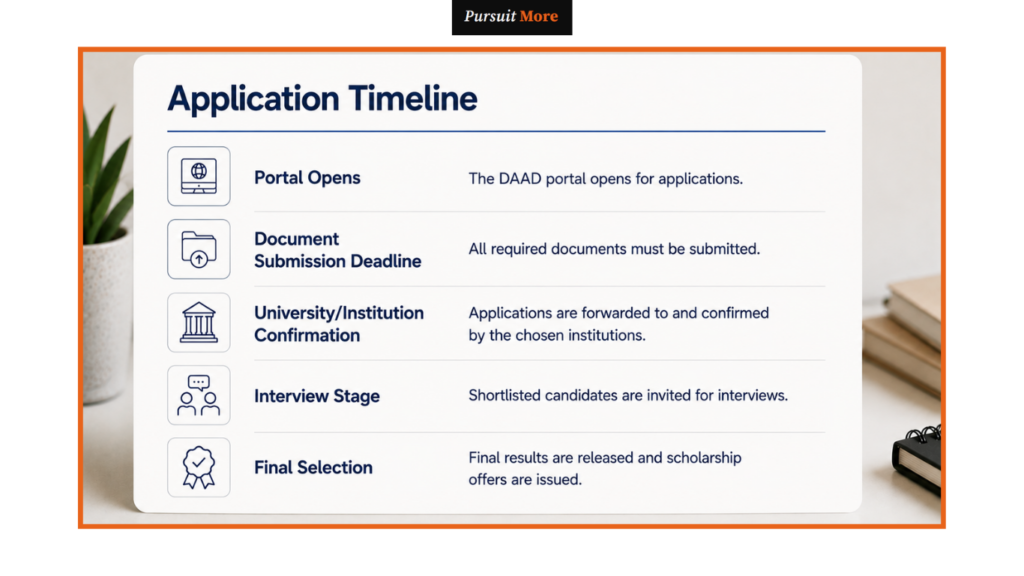
How to Apply for DAAD Scholarship from Nigeria: Step-by-Step Breakdown of Submitting the Documents
In order to meet DAAD scholarship requirements for Nigerian students, you must register on DAAD’s My DAAD portal. This is the only official channel for submitting an application. From there, you can view DAAD scholarships for Nigeria and narrow the search results according to your field of study, degree level, and eligibility. Remember that EPOS scholarships are a separate category within DAAD’s broader range of postgraduate opportunities, so look for programmes explicitly stating the EPOS track.
When applying, ensure to include the following documents:
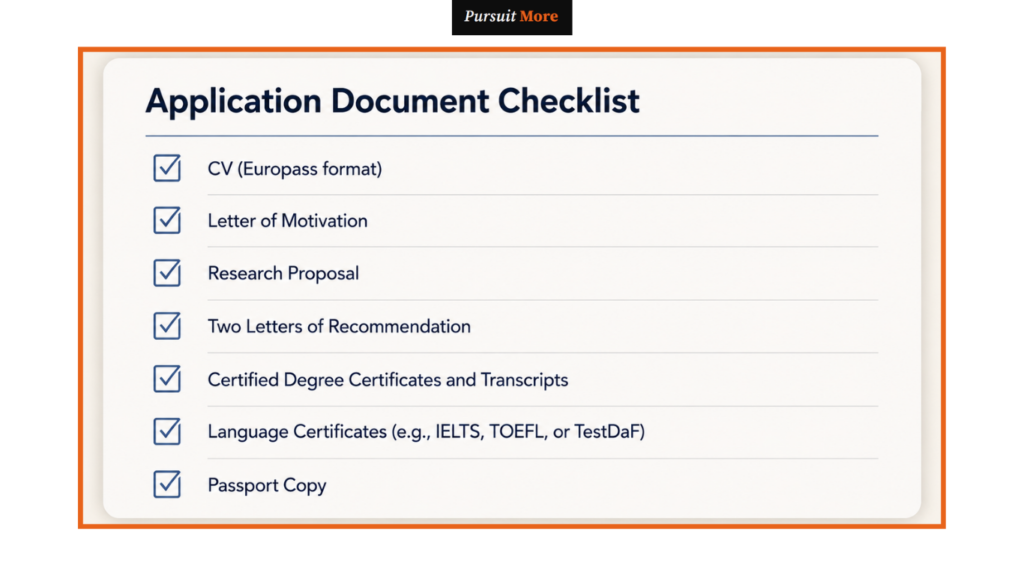
- Application form.
- CV in tabular form.
- Graduation certificates and transcripts.
- Research proposal (see the relevant section below).
- References.
- Proof of language proficiency (IELTS or TestDaF, for English and German language proficiency, respectively).
It is better to err on the side of caution and upload documents in advance of the deadline, as DAAD’s portal is notoriously slow and inaccessible in the run-up to deadlines. If successful in the application, you will receive an invitation from the embassy for an interview, after which you will need to apply for a German student visa. This is very important in fulfilling DAAD scholarship requirements for Nigerian students.
Nigeria-Specific Requirements That Are Overlooked Too Often
And now, the juicy part. The following DAAD scholarship requirements for Nigerian students are specific to Nigerian applicants and are either not explicitly outlined or can require additional explanation.
Document Authentication, Not APS
A common point of confusion is that Nigeria is not on DAAD’s APS certificate list. That requirement applies strictly to China, India, Vietnam, and Mongolia, so you can skip it entirely when applying from Nigeria.
What you do need is document authentication at the German Embassy in Abuja prior to the visa stage, which verifies your WAEC, NECO, and degree certificates.
This embassy verification process satisfies essential DAAD scholarship requirements for Nigerian students, but it can take several weeks depending on current caseloads.
Planning ahead for this verification timeline ensures you avoid one of the most frequent reasons applicants miss critical deadlines.
WAEC/NECO Verification
Your WAEC or NECO results must be accompanied by your scratch card or e-PIN, the card that grants you access to the verification site. A certificate is not sufficient at this point since independent verification can take place at any stage. The same applies to certificates issued by NECO – DAAD considers WAEC and NECO certificates equally valid.
NYSC Documentation
If you are a Nigerian student who was studying here when you graduated, you will be asked to supply your NYSC discharge, exclusion, or exemption certificate as evidence of citizenship. It is best to have this certificate, or the knowledge that you can get it, in hand.
Next Steps to Meet DAAD Scholarship Requirements for Nigerian Students
If you pass the DAAD scholarship selection process, bear in mind that when applying for a visa to come to Germany you will be expected to have a blocked (Sperrkonto) account in Germany into which your maintenance payments for the duration of your studies in Germany will be transferred (roughly corresponding to the €992–1,400 monthly stipend set by DAAD, depending on the level of your degree).
Although not strictly necessary for the DAAD selection process, it is a good idea to have a blocked account in Germany so as not to have to deal with extra bureaucracy when applying for your visa – so it is best to take care of this in advance.
Research Proposal Template: Why Your Generic Statement of Purpose Isn’t Enough
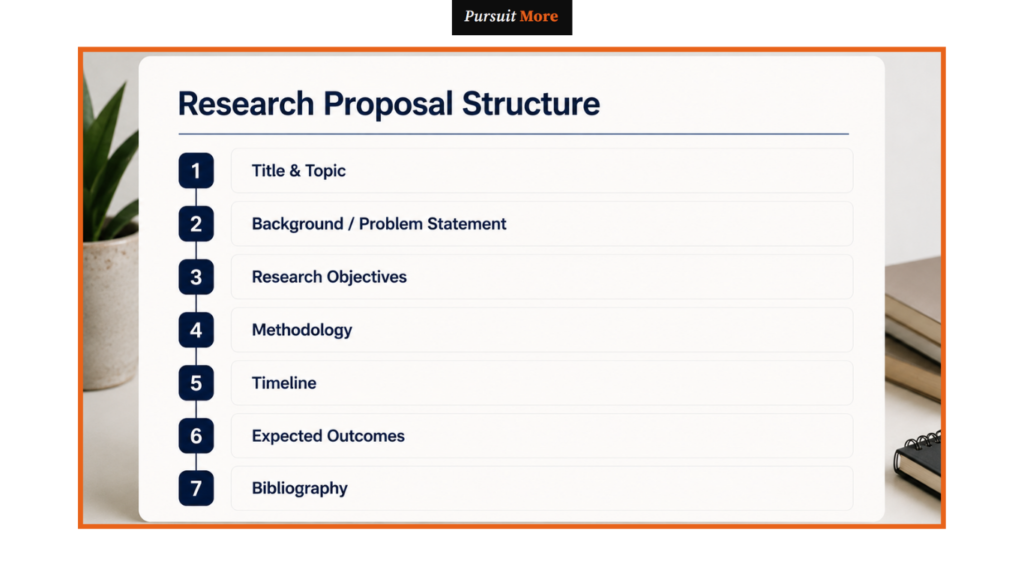
The DAAD scholarship requires a research proposal; a document most applicants to Nigerian graduate schools are unfamiliar with.
Selectors spend hours reviewing files, and submitting a compelling proposal that satisfies official DAAD scholarship requirements for Nigerian students is the best way to stand out from the competition.
Most Nigerian applicants, however, make recurring mistakes.
The primary issue is providing a generic description of their intended field, rather than formulating a specific research question that meets DAAD scholarship requirements for Nigerian students within the timeframe of a master’s degree.
The following bullet points provide general guidance on drafting your research proposal; you are encouraged to adapt the advice according to your field of study:
Title
Make sure to state the research question clearly in the title. Avoid generic titles such as “Renewable energy and the Nigerian economy” in favour of something specific, such as “The impact of solar energy on the urban economy of Kaduna.”
Problem Statement
State the problem you are trying to solve or the research gap you are trying to bridge, and explain why it matters for Nigeria or the region. Ground your problem statement in published research, rather than general impressions.
Research Question and Objectives
Clearly state the research question and what objectives your study will have in order to answer it or address it. A clearly worded research question helps the selector to understand what you want to achieve within the time frame of the scholarship. After reading your proposal, the selector should be able to repeat your research question verbatim.
Methodology
Explain how you would go about answering the research question and/or addressing the research gap. You should be as specific as possible about the methods that you would use: interviews, surveys, field studies, etc. Likewise, make sure to identify published works you would use as the basis for your own research. An honest assessment of the potential and limitations of the methodology you intend to use will make you look good to the selector, as many applicants significantly overestimate research opportunities.
Development Relevance
When applying to the DAAD EPOS, you are asked to describe what you intend to do with the knowledge and skills acquired in Nigeria or your country of origin – in other words, show the selector that you see the value in the research you will undertake. Therefore, describe what you intend to do in your home region based on your research.
Why Germany/this university?
It is usually best to choose a faculty/research group whose profile you know well and to which you feel yourself to be closest. Avoid vague generalities and do not try to guess the selector’s preferences; instead, try to single out specific research schools.
Do not exceed the word count specified for your scholarship, as exceeding it, if only by a few words, will give a poor impression.
Choosing References and Preparing Your Application
Many Nigerian applicants select the most senior available colleague they can find willing to serve as a referee, rather than someone who actually knows their work. This is understandable, but in your case, it would be better to ask somebody who really knows you. A referee needs to be able to speak knowledgeably about your research, which only people who know you can do.
Since many Nigerian referees will not be familiar with DAAD’s specific requirements, you should spend some time bringing them up to speed on the details of your application package. Provide them with a copy of your research proposal, a CV, and a few guidelines (see the Research Proposal section above).
Even referees who have supervised similar applications before may appreciate a quick refresher on DAAD’s specific expectations, since the process can differ from other scholarships they’re more familiar with.
Interview Preparation
Certain DAAD programs require a formal selection interview. In either case, thoroughly preparing to defend your application against the core DAAD scholarship requirements for Nigerian students is essential.
Practice presenting your research question and methodology in clear, jargon-free language to demonstrate true subject mastery.
Be ready to justify your choice of research methods, explain your operational rationale, and address potential limitations directly.
Align your post-study plans with official DAAD scholarship requirements for Nigerian students by articulating the exact practical impact your research will deliver in Nigeria or your home region.
Conduct mock interviews with a colleague or mentor to refine your answers, build confidence, and ensure smooth delivery under pressure.
Going Further: DAAD Scholarship Requirements for Nigerian Students
Understanding the core DAAD scholarship requirements for Nigerian students is essential, but ensuring your research proposal meets these rigorous standards is where most applications succeed or fail.
Ask yourself: Is your research question defined clearly enough? Is your proposed methodology practical within the scholarship timeline? Have you clearly demonstrated development relevance to satisfy official DAAD scholarship requirements for Nigerian students?
If you want an objective assessment of your proposal, the Full Application Audit by Pursuit More reviews your documents in detail and identifies your strongest and weakest points, while also helping you to position yourself appropriately for the scholarship. If DAAD isn’t the only door you’re keeping open, our live scholarship listings cover other current funding options worth comparing.