ETH Zurich Excellence Scholarship for Nigerians: The Complete 2026 Application Guide

Most scholarship guides only briefly mention the pre-proposal, much like another of the boxes to check. It is not. The ETH Zurich Excellence Scholarship for Nigerians is not just about grades and letters of recommendation; it requires an original and practical research question that is related to faculty interests and survives the plagiarism checks.
The requirement is the one that distinguishes those applicants who get the award of CHF 12,000 per semester from those who don’t make it to the first round.
This guide will help Nigerian graduates, aged between 22 and 30 years, with a First Class or high Second Class Upper degree, apply for precision masters scholarship opportunities at ETH Zurich. You will learn how to write the pre-proposal which a competitor skips over, you will budget realistically for Zurich’s cost of living, and you will prepare for the selection interview in February.
The following is the full-fledged Master’s in Switzerland for African Students 2026 guide that’s genuinely the most difficult step.
What Is the ETH Zurich Excellence Scholarship (ESOP) and the Two Funding Tracks

The ETH Zurich Excellence Scholarship for Nigerians is offered through the Excellence Scholarship & Opportunity Programme (ESOP), the university’s flagship funding opportunity for outstanding international Master’s students. Before you apply, it is important to understand which of the two funding tracks best matches your profile.
The full ETH Zurich Excellence Scholarship for Nigerians (ESOP) provides comprehensive support. It covers living and study costs of CHF 12,000 per semester (CHF 24,000 per year) plus a full tuition fee waiver. From the 2027 intake onward, the living stipend will increase to CHF 13,500 per semester. The award lasts for the standard duration of the Master’s programme (three or four semesters, depending on the degree).
The second track is the ETH-D Scholarship (Partial Funding). This is a department-supported award that is less comprehensive than the full ESOP but can still be valuable for strong candidates who fall just outside the top selection.
Both tracks use the same application. You simply indicate your preferred track when you apply. If you ranked in the top 10% of your graduating class, you should prioritise the full ETH Zurich Excellence Scholarship for Nigerians (ESOP).
Eligibility Criteria for Nigerian Applicants

ETH Zurich does not have a set of cut-off GPAs. Rather, they seek to hire about 10% of the best candidates from their Bachelor’s programme. This means that for Nigerian graduates, a First Class Honours (4.5/5.0 CGPA or 3.5/4.0 and above) or a good Second Class Upper coupled with a ranking in the top 10 percent of your class.
Your academic record will need to be of high calibre, but the ranking will be more important than just the grade. A Second Class Upper obtained from a very competitive university, such as the University of Lagos or Ahmadu Bello University, with a confirmation letter from a lecturer stating the top 10% standing, is better than a marginal First Class from a less competitive programme.
Take the case of Emma Craig as a case in point. In 2025, she joined the ETH Zurich Department of Biosystems Science and Engineering, after receiving her BSc in Chemical Engineering and First-Class Honours from the University of Cape Town. She had explicit endorsement from her academic referee that she was in the top 10% of her graduating class. This is the norm for ESOP scholars; not only are they getting good grades, but they are getting them in a competitive group.
Your referees are required to be academic, not professional. ETH asks for two research-relevant academic references that can talk about your ranking and research potential.
Pre-Proposal Writing Workshop

This is what most guides drop you at. Your pre-proposal for your Master’s thesis is not a formality – it is a 2-3 page paper that really shows that you can conduct independent research, and it has been plagiarism-checked. The ETH explicitly states that the “pre-proposal for the Master’s thesis should be prepared by the student alone and must follow accepted scientific style of citation.
Step 1: Identify Your Research Question
The pre-proposal must have an original research question related to interests in the ETH. You don’t necessarily have to have a supervisor confirmed; however, your proposal should demonstrate that you are familiar with the research opportunities in the department you are proposing.
To determine your angle, check out the faculty pages of the programme you are interested in doing a Master’s degree in, and look for 2-3 professors whose research falls within the scope of what you’re interested in. Learn about the most recent publications of their research (last 3- 5 years). Identify where or what points exist for Africa/Nigeria, sustainable infrastructure, renewable energy systems, computational biology in relation to tropical diseases, and data science for optimising agriculture.
The question should be clear and specific enough to be able to be completed within the limits of a Master’s thesis; it should be ambitious enough to show intellectual maturity. Try to avoid this kind of vague statement, such as “I want to study machine learning”. Rather, propose it specifically: “In this proposal, the application of transformer-based neural networks to low-resource language modelling for Hausa & Yoruba NLP, following recent progress in multilingual model compression, is explored.
Step 2: Structure the Document
Conduct the proposal in proper academic format. Use a short descriptive title. The introduction should set the scene and explain why this is a problem and why it is important, in the size of 200–300 words. Be sure to state your research question and objectives clearly. Provide a literature review showing knowledge of the existing literature, with appropriate citations. Describe your planned approach to the research – what data you will use, how you will process the data and how you will analyse them. Describe your contributions: new knowledge or practical application to be gained? Give an approximate timeline of the 6-month thesis period. Conduct research in a properly referenced manner, according to an internationally recognised referencing system.
Step 3: Common Weaknesses to Avoid
The easiest way to get disqualified is to plagiarise. ETH: Detection software; paraphrase correctly and cite all sources. Any idea that could be transferred to another university is not a well-researched idea, but a generic one (e.g., referring to specific ETH labs, facilities or faculty work). Another possible mistake is having too much scope: You only have 6 months for the thesis, so make sure you propose something that is achievable, not a PhD dissertation. Last but not least, pay attention to the “how-to”. ETH values applied research: demonstrate the application of your work in solving real problems.
Step 4: The Faculty Alignment Check
Before submission, check to see if there is at least one ETH faculty member who might be available to supervise your proposal. There’s no confirmation required, but the proposal must be within the scope of the research areas of your chosen department. If multiple parts of the department interest you, make sure the department that is most suited to your methodology is first.
The pre-proposal is assessed for originality, feasibility and suitability for the ETH research strengths. It is important to consider the selection process. Don’t consider it a second thought.
Required Documents and the February Interview
When preparing your application package for competitive awards like the ETH Zurich Excellence Scholarship for Nigerians, submitting complete and accurate documentation is critical. In addition to your pre-proposal, your submission must include your Bachelor’s degree certificate and full academic transcripts, complete with an official explanation of your university’s grading scale.
Ensure your CV includes a direct telephone number, as shortlisted candidates are contacted by phone during initial evaluations in February.
You will also need to provide two academic letters of recommendation and a compelling 1 to 2-page letter of motivation. Given the high volume of international applicants competing for the ETH Zurich Excellence Scholarship for Nigerians, presenting a strong score on the GRE General Test is strongly recommended to stand out during initial screening.
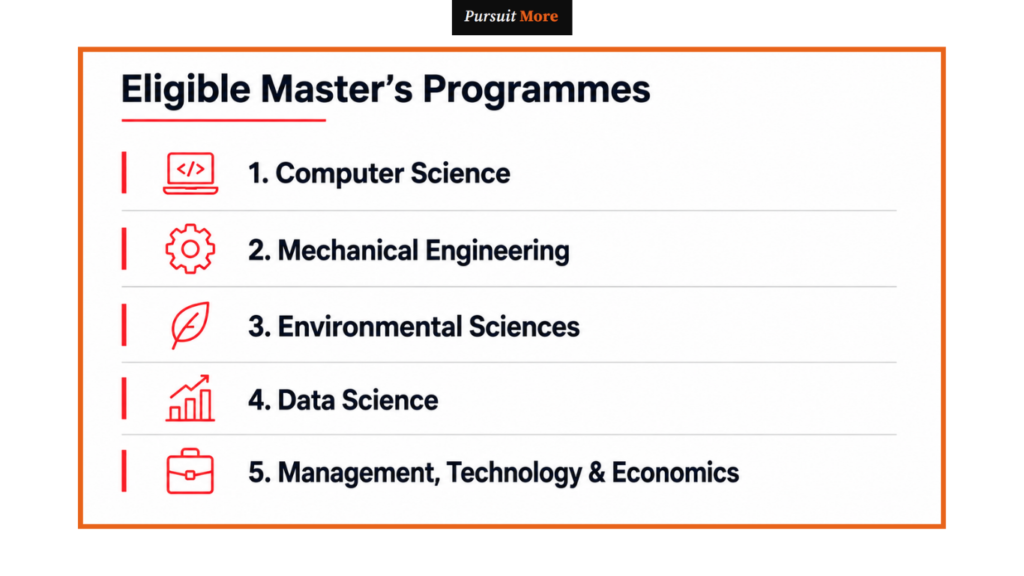
Keep in mind that specific Master’s programs may require additional materials. For example, architecture applicants must submit a design portfolio, computer science candidates may need to provide verified coding samples, and other departments require detailed documentation of prerequisite coursework. Always review the exact requirements of your chosen department before submitting.
Candidates who pass the document screening stage will be invited to a selection interview in February. This is typically a 20 to 30-minute video call with department faculty members who will evaluate your research experience, academic readiness, and overall fit for the program. Be prepared to defend your pre-proposal clearly and explain why ETH Zurich is the ideal institution for your specific research goals.
Living Cost Budget Breakdown
The amount of ESOP is CHF 12,000 per semester, which is approximately CHF 2,000 per month for a 6-month period. This compares with Zurich’s actual costs.
Your highest cost is your accommodation. The cost of student accommodation at WOKO ranges from CHF 600-900 per month; in the private market, the rent paid for single rooms is often more than CHF 1200 per month. The average expenses on food and groceries are CHF 400-600 each month. All students have to be insured against health risks and must pay a monthly premium of CHF 100–150. The cost of public transport is CHF 50-80 and study materials plus miscellaneous is another CHF 150-300. The total cost of your monthly expenditure is between CHF 1,520 and CHF 2,440.
ETH recommends a monthly basic subsistence cost of CHF 2000 – 2300. The CHF 12,000/semester stipend will be around CHF 2000 per month, which may be difficult to cover with a low income, but with careful budgeting it is possible to do.
WOKO (Wohnkommission der ETH Zürich) offers student housing at affordable prices from approximately CHF 600 per month. Apply as soon as you get “On List” – there are more people on “List” than we have spots. However, your affordability lever is getting WOKO housing – without housing, your stipend goes to renting in the private housing market.
A number of ESOP students take on part-time employment to make up any shortfall in their stipend. Students from outside of the EU may work up to 15 hrs per week during the semester and 100 hrs/week during semester breaks. Research assistant opportunities in your department are especially good, as they are paid fairly at CHF 25-35 per hour and they enhance your academic profile.
Key Deadlines for the ETH Zurich Excellence Scholarship for Nigerians
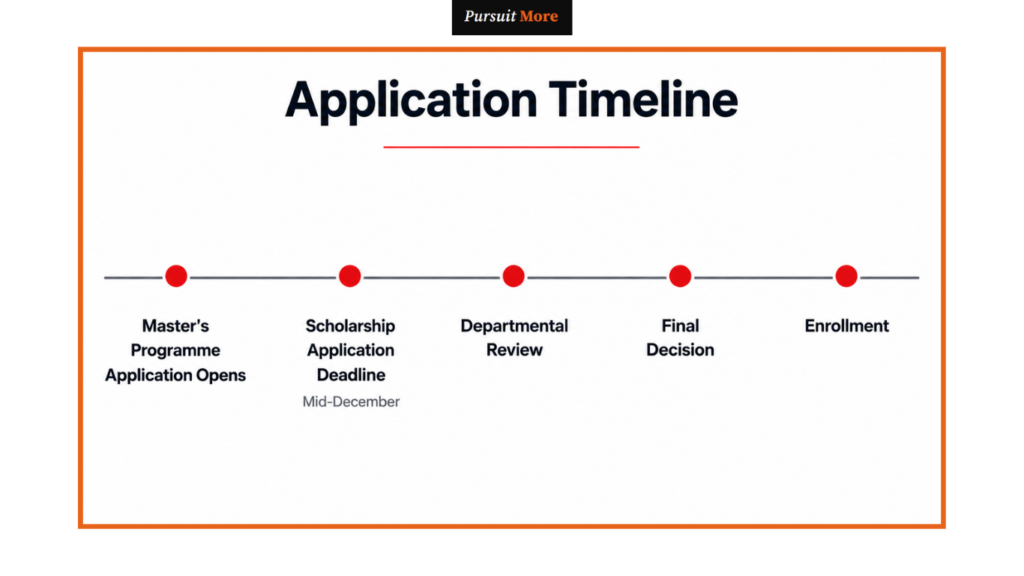
Application for the 2026/2027 session will open on 1st November 2026 and close on 30th November (11:59 AM CET) 2026. This is an inevitability and is earlier than many scholarship programmes.
This is what your timeline should look like. Prepare documents, write a pre-proposal, get referees and take the GRE (if applicable) from August to October 2025. The application will be open from 1st November to 30th November 2026. The application review period will be December 2026 – January 2027. If you are shortlisted, you will be invited to take part in selection interviews in February 2026. The deadline for announcing admission and scholarships is March – April 2026. Process your student permit application and housing search from May to July 2026. The Programme starts in September 2026.
Begin preliminary research for a proposal in July or August. The top reason that strong candidates fail is that they rush their documents in late November.
Student Permit and Visa Logistics
Since you are a Nigerian citizen (not a citizen of the European Union/EFTA), you need to be attentive to Switzerland’s immigration laws.
The accessible amount of funds required for your student permit (B permit) is CHF 21,000 per year in the Canton of Zurich. ESOP meets this requirement and requires presentation of the scholarship award letter when applying for a permit.
There are three steps to the visa process. You must obtain a National Visa (Type D) at the Swiss Embassy in Abuja after ETH admission, and then you will be allowed to work in Switzerland. If you arrive in Zurich, change your visa to a residence permit at the Migration Office. Processing time is 4-8 weeks after acceptance—apply as soon as you are accepted.
Working there full-time and using the vehicle with the company is required to have health insurance immediately. For Swiss basic health insurance (Krankenkasse), you should plan on paying CHF 100-150 per month.
Alternative Option: Swiss Government Excellence Scholarships
Alternatively, the Swiss Government Excellence Scholarships are available if ESOP does not materialise or for PhD studies. These scholarships are offered via the Swiss Embassy in Abuja and cover CHF 2450 per month for a Master’s or PhD degree candidate who is a researcher.
There are some key differences in this pathway. It is not possible to apply directly to ETH, but through the embassy. An acceptance letter from a Swiss professor is required for applying. It is usually between September and December, depending on the embassy. This programme is tailored to candidates who have a clear focus on PhD research and are interested in the programme.
You can apply for both at the same time, so that you have the best possibility for funding: Swiss Government scholarship and ESOP.
Coaching Support for Applicants
There are two intervention points in the ESOP application that can have a major impact on success, and professional guidance can have a significant impact on these points.
The Full Application Audit service offers in-depth comments on your pre-proposal structure, research question development and faculty alignment – the very thing that makes most strong applicants not get through!
The Interview Coaching programme will help you prepare for the selection interview in February with the training of mock interviews using faculty-style questions and feedback on your research presentation.
Check out the Scholarships section for other funding opportunities other than ESOP. If you want to know what it’s like from the horse’s mouth, make sure to check out the MSc story from recent African graduates who successfully made it through them.
For a broader overview of funding opportunities available to Nigerian students, see our complete guide on postgraduate scholarships in Nigeria 2026.
Final Checklist for the ETH Zurich Excellence Scholarship for Nigerians
When applying for the ETH Zurich Excellence Scholarship, make sure your pre-proposal is original, well-cited and relevant to any particular faculty research. Make sure your CV lists your telephone number including the international dialling code. Make sure your referees send in your letters on time. Provide GRE scores if necessary for your programme. Attach explanations of the grading scale to all transcripts. You should include some concrete reasons for your choice of ETH and for this programme in your letter of motivation. Must be submitted before Nov. 30, 2026.
A very serious approach to the pre-proposal is required if a Nigerian graduate is to get the ETH Zurich Excellence Scholarship. With more than a thousand applicants each year competing for a handful of awards, GPA isn’t the only thing that matters. It is your ability to develop a vision for research which is original and well-suited to the academic environment at ETH. Once you have mastered the pre-proposal, you are ready to get over the toughest hurdle to full funded Master’s study in Switzerland.