Postgraduate Scholarships in Nigeria 2026: The Complete Masters & PhD Guide

Securing postgraduate scholarships in Nigeria 2026 is about more than just filling out an application, it requires funding backed by an accepting research supervisor. While most information on postgraduate scholarships in Nigeria 2026 separates academic admission from financial aid, the reality for Master’s and PhD candidates is that funding and supervisor placement go hand in hand.
Whether you are applying for local university programs or international awards, this guide covers the top available postgraduate scholarships in Nigeria 2026 and the exact steps to secure a research supervisor to back your application.
The Landscape for Postgraduate Scholarships in Nigeria 2026
Before submitting applications, it helps to understand how postgraduate funding is structured. Opportunities generally fall into three distinct categories:
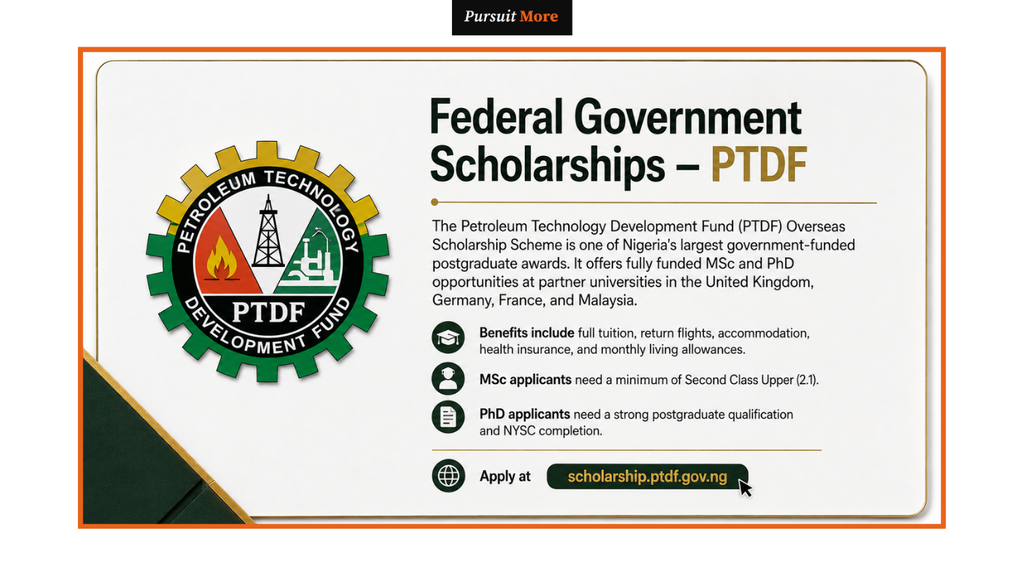
Government-Funded Scholarships: These are sponsored by the government (e.g. Chevening Scholarships sponsored by the UK Foreign Office, PTDF Scholarships sponsored by the Nigerian Government). These focus on national development, leadership potential and wide sector impact. They normally come with a pledge to return to Nigeria after their education.
University-funded scholarships: Given by the university, either by having tuition waived, or as a graduate teaching assistant, or as a departmental fellow. They rely on the quality of the academic programs and its funding.
Research-Council & Grant-Funded Scholarships: These are based on a Principal Investigator’s research grant. For these programs, it is nearly always necessary to have your profile read by a potential supervisor who must be willing to accept you into their lab or research group before you will receive funding.
Master’s and PhD Scholarships Lists: Postgraduate Scholarships in Nigeria 2026
Here is a quick overview of the various sources of funding available to Nigerian students for postgraduate studies in 2026/2027.In this post I shall be sharing with you the various options you have for funding your postgraduate studies in Nigeria for 2026/2027 academic year.

1. Master’s Scholarships
Chevening Scholarship (UK)
- Funder: UK Foreign, Commonwealth & Development Office (FCDO)
- Eligibility: Open to Nigerian citizens holding an undergraduate degree (minimum 2:1), at least two years of work experience, and a proven leadership record.
- Coverage: Full tuition, accommodation, monthly living stipend, economy return flights, and arrival allowances.
- 2026/2027 Deadline: October 6, 2026 (Applications open August 4, 2026).
- Official Link: Chevening Application Portal
Erasmus Mundus Joint Master Degrees (Europe)
- Funder: European Commission
- Eligibility: Bachelor’s degree holders worldwide. Programs require study across at least two European countries.
- Coverage: Full tuition, participation costs, comprehensive health insurance, travel grant, and a €1,000 monthly living allowance.
- 2026/2027 Deadline: October 2026 – February 2027 (Varies by course consortium).
- Official Link: Erasmus Mundus Catalogue
Mastercard Foundation Scholars Program (Global / Africa)
Funder: Mastercard Foundation in partnership with partner universities (e.g., McGill, Cambridge, Edinburgh, KNUST).
Eligibility: Academically talented young African graduates facing economic barriers who demonstrate community leadership.
Coverage: Full tuition, accommodation, living expenses, textbooks, laptop, and travel allowance.
2026/2027 Deadline: September 2026 – January 2027 (Varies by partner institution).
Official Link: Mastercard Foundation Scholars Program

2. PhD & Research Scholarships
PTDF Overseas & Local Postgraduate Scholarship Scheme
- Funder: Petroleum Technology Development Fund (Nigeria)
- Eligibility: Nigerian citizens with a minimum of 2:1 in a STEM or Oil & Gas-related field for Master’s applications, or a strong research proposal for PhD candidates.
- Coverage: Return flight ticket, full tuition, health insurance, monthly living allowance, and research bench fees.
- 2026/2027 Deadline: February 27, 2026.
- Official Link: PTDF Official Portal

Commonwealth PhD Scholarships (High-Income Countries / UK)
They are awarded to students from high-income countries to undertake doctoral study in the UK.
Funder:The Commonwealth Scholarship Commission (CSC) UK is the funder.
Qualifications: Nigerian citizens with First Degree (2:1) and relevant Master’s Degree. Should demonstrate the impact of development for Nigeria.
Coverage: Approved airfare, full tuition fees, allowance for clothing in cold weather (£1,347–£1,652/month), allowance for study travel in addition to this and stipend (£1,347–£1,652/month).
2026/2027 Deadline: Applications for current fellowships will be accepted till 25 August 2026, while the general PhD round will open in September 2026.
Official link:https://cscuk.fcdo.gov.uk/scholarships/?hl=en-US
How to Identify and Approach a Supervisor: Postgraduate Scholarships in Nigeria 2026
For research-based Master’s and PhD programs, securing a supervisor’s commitment is essential for funding approval.
Step 1: Target Academic Research Fits
Avoid mass-emailing every faculty member in a department. Search university faculty directories for professors whose work aligns directly with your interests. Focus on:
Current lab members: Confirms whether the professor is actively accepting new students.
Recent publications (2024–2026): Confirms their current research direction.
Active research grants: Listed on lab websites, indicating available funding.
Step 2: Craft a High-Converting Cold Email
Keep your initial email clear, professional, and concise. Avoid generic salutations like “Respected Sir/Madam, I wish to apply under your prestigious guidance.”
Recommended Structure:
- Subject Line: Inquiry Regarding Postgraduate Research Supervision – [Your Name]
- Paragraph 1 (Introduction): State who you are, your academic background, and the specific research topic you are targeting for Fall 2027 entry.
- Paragraph 2 (Academic Alignment): Highlight relevant undergraduate or research project work, methodologies used, and how your prior study aligns with their laboratory’s recent papers.
- Paragraph 3 (The Call to Action): Politely ask if they are accepting prospective students and whether they would be open to supporting your scholarship application.
- Attachments: Attach a streamlined 2-page Academic CV and a 1-page Research Concept Note.
Step 3: Manage Follow-Ups
Professors receive high volumes of email daily. If you do not receive a reply within 10 to 14 business days, forward your initial email with a brief, polite follow-up:
“Dear Professor [Last Name],
I am following up on my previous email regarding potential postgraduate supervision for Fall 2027. I know you have a busy schedule, but I wanted to ensure my message didn’t get lost in your inbox.
Thank you for your time and consideration.”
If there is no response after one follow-up, move on to the next supervisor on your target list.
Converting Interested Supervisors into Active Advocates
When a supervisor responds with interest, take the following steps to solidify their support:
- Request Pre-Application Feedback: Ask if they would be willing to review your one-page research proposal before official submission. Their feedback will refine your proposal and demonstrate your ability to take academic direction.
- Inquire About Institutional Funding: Ask directly: “Are there departmental Teaching Assistant (TA) or Research Assistant (RA) positions available if external scholarship funding is not secured?”
- Establish a Shared Timeline: Provide your supervisor with a clear schedule of scholarship deadlines so they have sufficient time to submit reference letters on your behalf.
Application Timeline Framework: Postgraduate Scholarships in Nigeria 2026
Planning your application cycle backwards from your target deadlines prevents last-minute submission errors:
- Phase 1: 6–8 Months Prior (August – September)
- Audit entry requirements and request official transcripts.
- Prepare standardized tests (IELTS/GRE, if applicable) and draft your core research concept note.
- Phase 2: 4–5 Months Prior (October – November)
- Launch personalized supervisor outreach.
- Send polite follow-ups and schedule introductory calls with interested professors.
- Phase 3: 2–3 Months Prior (December – January)
- Finalize supervisor agreements and obtain formal support letters.
- Complete university admissions forms to secure your applicant IDs.
- Phase 4: 1 Month Prior (February – March)
- Polish scholarship essays and secure reference submissions.
- Submit complete application packages before the portal closes.
Common Pitfalls to Avoid in Postgraduate Scholarship Applications
Securing postgraduate scholarships in Nigeria 2026 or international funding requires strict attention to detail. Many qualified candidates miss out on competitive postgraduate scholarships in Nigeria 2026 and fully funded international awards due to easily preventable administrative and strategy errors during the application phase:
- Submitting Generic Research Proposals: Sending a vague concept note to multiple faculty members signals a lack of preparation. Tailor every proposal to match the specific research focus and active grant projects of your target supervisor.
- Ignoring Document Authentication Deadlines: Nigerian academic institutions can take weeks to process official academic transcripts. Delaying transcript requests or official verification (such as Ministry of Education authentication or evaluation services) often leads to missed deadline windows for major postgraduate scholarships in Nigeria 2026.
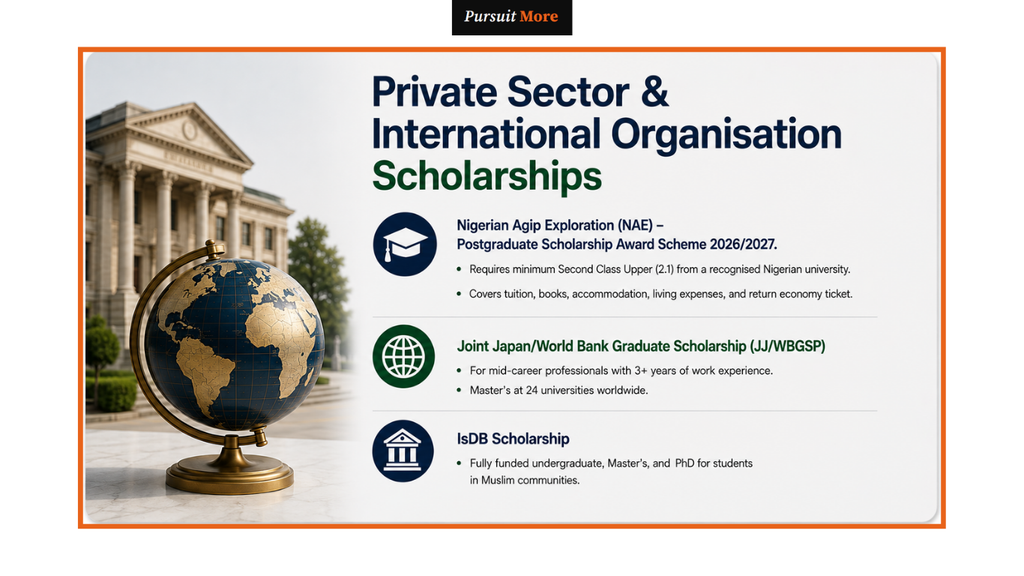
- Failing to Align with Funder Priorities: Government and corporate-sponsored awards (such as PTDF, NNPC/SNEPCo, or Chevening) prioritize national development, sector leadership, and long-term socio-economic impact in Nigeria. Frame your statement of purpose around how your research addresses specific industrial or developmental challenges within Nigeria.
- Overlooking Recommender Guidance: Submitting weak or generic reference letters degrades an otherwise strong application. Provide your referees with a clear CV summary, scholarship criteria, and application deadlines at least four weeks in advance to ensure impactful, tailored recommendations.
Next Steps: Postgraduate Scholarships in Nigeria 2026
To maximize your chances for 2026/2027 entry, begin by narrowing your search to 3–5 programs that match your exact academic background. Identify key faculty members conducting active research in those areas, draft your tailored outreach emails, and begin your supervisor engagement early.