Whether you are a fashion designer, a caterer, a mechanic or even a content creator, the moment you want to incorporate your business, you will face a challenge that most business advice on the internet will not be able to solve. These pieces of advice probably feel like they were written for someone else.
The digital space is flooded with articles on “how to pitch a tech startup” or “how to raise a seed round from venture capitalists.” But where do you go when you are not building the next big app? What if you just need N500,000 to buy an industrial oven or N2 million to stock up your provision store before the festive season? The reality is that finding small business grants in Nigeria has historically been a frustrating experience for everyday entrepreneurs.
However, 2026 has brought a massive shift. The government and the private sector have finally realised that nano and micro-businesses are the actual engine room of the economy. Today, there are real, accessible funding options available for the market trader, the local manufacturer, and the artisan.This guide is not for tech founders; it is for those hardworking Nigerians who are running a small business and need a way to gain access to CAC free business registration or get funding that will help their business to thrive.
The 2026 Small Business Grants In Nigeria
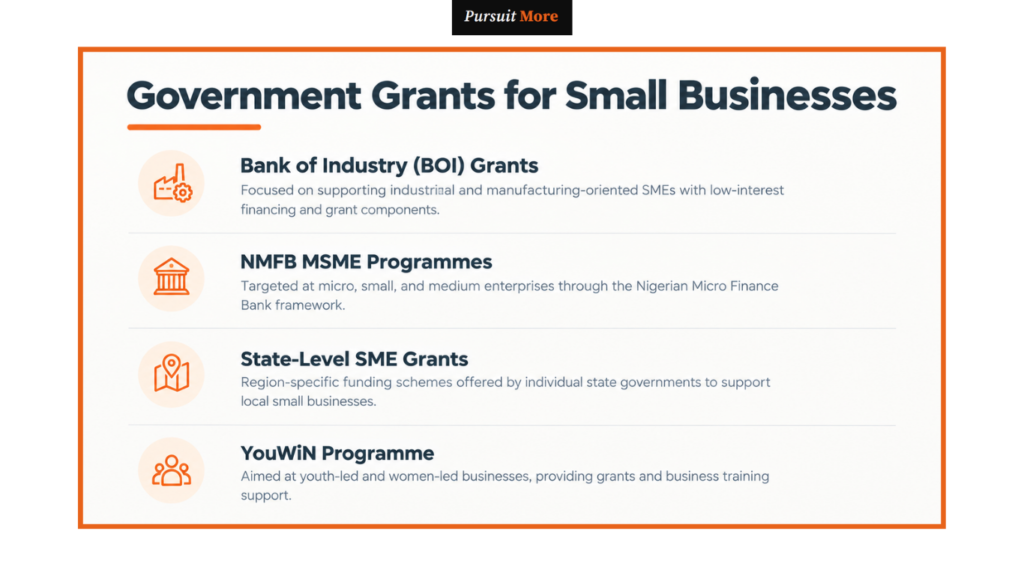
If you are constantly asking how to get a small business loan in Nigeria, or better yet a non-repayable grant in Nigeria, then you might be in a great position this year, as the year 2026 has introduced several highly targeted government funding programmes. Instead of relying on confusing WhatsApp broadcasts, most of which are false, you can pick the one that matches your situation from the list we have reviewed here.
Included in this review is a verified breakdown of what grants are available and what access the grant or loan entails. Not only that, but you will also get details on how the money will be disbursed.
NiYA × Cascador Founders Programme
Through the Nigerian Youth Academy (NiYA) and in partnership with Cascador, the Federal Government of Nigeria has launched a highly targeted founders programme for 2026. Despite the term “founders” which is used in this funding programme, interested Nigerians should know that this programme is entirely open to everyday young Nigerian entrepreneurs who are running any tangible businesses.
The Offer
The NiYA-Cascador programme is targeted at selected business owners, who are to undergo an intensive 4-week virtual training programme. The courses covered in this programme include business growth, fundamentals and investment readiness. After the training, there will be a final pitch day where participants will pitch their business proposal. The top-performing founders will then receive up to N5 million in non-dilutive funding. The term “Non-dilutive” means it is a grant, and recipients do not have to pay it back, and neither does the government take a percentage of your business.
Applications for this grant open on August 19, 2026 and interested participants can register via the official NiYA platform. This grant is ideal for small business owners who are already running their business operations. They need to have a clear vision for expansion; they also need to prove that they need significant capital to buy heavy equipment or scale up the local production of their main product.
National MSME Awards 2026
This is the federal government’s annual recognition programme, but the 2026 edition has expanded its financial backing significantly to reward actual impact on the ground.
The Offer
With the MSME 2026 Awards, the government is distributing over N1 billion in grants across 12 different categories. These award categories cover everyday sectors like excellence in agriculture, manufacturing, fashion and creative arts. The grand awards ceremony took place on June 27, 2026.
To be eligible for this award, you must have a registered business and be able to demonstrate measurable growth or community impact within the past year. To apply for this award, applicants are required to submit a short video pitching their business and the impact of their business. This award is best for businesses that have scaled a unique local production line and have employed up to five people.
It is also available to manufacturers who are producing local alternatives to expensive imported goods. When recording the video pitch, applicants are advised not to just make it a talk show, but instead show a video of your workshop, your staff and show your products in action.
SMEDAN Grow Fund
The Small and Medium Enterprises Development Agency of Nigeria (SMEDAN) has rolled out its massive Grow Fund for 2026. They have directly connected this program to their Inspire, Create, Start and Scale (ICSS) initiative.
The Offer
SMEDAN is bringing a N500 million funding pool while offering zero-interest or single-digit interest financing to qualifying businesses. While this business financing is not free money, it is virtually one of the cheapest credits you will find anywhere in the country.
One important thing to know about this credit facility is that much of the disbursement is cooperative-driven and association-based. Getting this facility does not require you to fill out a form and get the loan disbursed; however, applicants must first complete the SMEDAN ICSS business training, which is a prerequisite to accessing the loan.
This ICSS training is open nationally, with different modules for beginners, people with mere ideas and existing business owners who are looking to scale their businesses. The SMEDAN Grow Fund is best suited to market women cooperatives, mechanic village associations and agricultural clusters who need working capital without the crippling 30% interest rates charged by traditional commercial banks.
YouthCred for Entrepreneurs
YouthCred is a funding program that is set up to raise funding for entrepreneurial Nigerian youths. It is Implemented by the Nigerian Consumer Credit Corporation (CREDICORP), YouthCred is a massive push to democratize access to credit for young everyday Nigerians.
The Offer
This funding program gives young entrepreneurs collateral-free loans ranging from N200,000 to N2 million. The Federal Government of Nigeria is ambitious with this programme, with an aim of reaching up to 500,000 beneficiaries in its first major phase. Owing to the nomenclature, YouthCred it is targeted precisely at Nigerian entrepreneurs who are aged 18 to 39. To ease access to this program, applicants do not need landed property or a wealthy guarantor.
Approval, however, is based on the business cash flow, the applicant’s bank transaction history and a successful completion of a mandatory digital financial literacy course. The most ideal set of individuals to partake in this program includes the content creator who needs to upgrade to a professional camera, the caterer who needs a new deep freezer or the trader who needs quick cash to clear goods at the port. From this set of people listed, you will understand that the programme is targeted at everyday Nigerians.
CAC Free Business Registration in Nigeria 2026: Why It Matters
The blunt reality is that Micro, Small and Medium Enterprises (MSMEs) account for roughly 13% of Nigeria’s GDP and provide the vast majority of jobs. Yet, an estimated 80% of these businesses operate entirely in the informal sector.
You might have the busiest car wash in your local government or the most popular pastry shop on your street, but if you do not have a Corporate Affairs Commission (CAC) certificate, to the government and to the banks your business simply does not exist. Many small business owners avoid formalisation because they fear taxation, but the truth is that nano businesses are largely exempt from heavy corporate taxes. Those that remain informal pay a cost of losing out on millions in grants and cheap loans that far outweighs any perceived benefit of hiding.
Formalisation is the master key to receiving most government funding. Without a formalised business, you cannot get a corporate bank account or apply for a government grant. Historically, the cost of registration, which has been around N20,000 to N25,000 for an ordinary business name, has been a barrier for many micro-business owners.
That barrier has been completely removed with the CAC free business registration Nigeria 2026 initiative. The CAC, in a landmark partnership with SMEDAN, is waiving over N3 billion in registration fees to formalise 250,000 MSMEs. This means eligible nano and micro-entrepreneurs pay absolutely nothing to get their business names legally registered. If you are already registered in the SMEDAN database but do not have a CAC certificate, you are automatically eligible for this waiver.
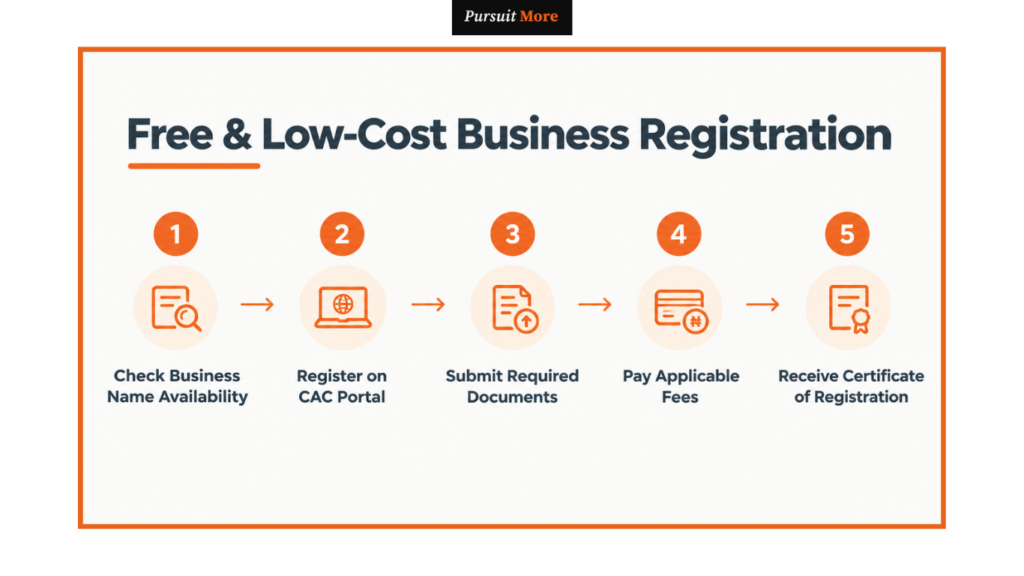
Step-by-Step CAC Registration Walkthrough
Getting your business registered for free under this 2026 waiver requires following a specific sequence. If you go directly to the standard CAC portal first, you will be asked to pay. Follow these exact steps to claim your free slot. You do not need to pay a lawyer or an agent to do this for you.
Step 1:Gather Your Documents
The first thing you need to do is to get all your documents ready. Start with your National Identification Number (NIN), an active email address, a working phone number, a clear passport photograph and a scanned picture of your signature on a blank white piece of paper. This information is necessary, and you need to keep it handy before visiting the registration portal.
Step 2: Start at the SMEDAN Portal
After getting all these documents ready, the next option is to log on to the official SMEDAN registration portal. Do not pay anyone; the official portal is 100% free.
Step 3: Create Your Account
At this stage, you should sign up with your personal details and verify your email address. If you are entirely new to the SMEDAN website, you need to create a fresh SMEDAN account.
Step 4: Obtain Your SUIN
After signing up and successfully creating your account. The next step is to get your SMEDAN Unique Identification Number (SUIN). This step entails clicking on “Enlist Business” and filling in your business details. The things you need to include are what you do, your address, your industry, etc. Upon submission, the system will instantly generate your SMEDAN Unique Identification Number (SUIN). Note this number as it is your golden ticket.
Step 5: Move to the CAC iCRP Portal
Getting your SUIN is the beginning of the process. Next, you will be directed to the CAC’s iCARP registration portal. When you enter your SUIN, it acts as a waiver code that automatically bypasses the payment gateway.
Step 6: Reserve Your Name
The next step is to submit your preferred business names for reservation. It is required that you make sure you submit a unique name. Once CAC approves the name, you will receive an Approval Validation or Availability Code (AV code).
Step 7: Complete the Registration
To complete your registration, you need to fill in your final proprietor details, upload the passport photo and signature that you had ready in Step 1 and hit submit.
Step 8: Download Your Certificate
The approval time takes between a few days and a couple of weeks. Once approved, you can download your official CAC Business Name Certificate directly to your phone as a PDF.
How to Get Small Business Loans in Nigeria: The Private Sector Alternatives to Government Funding
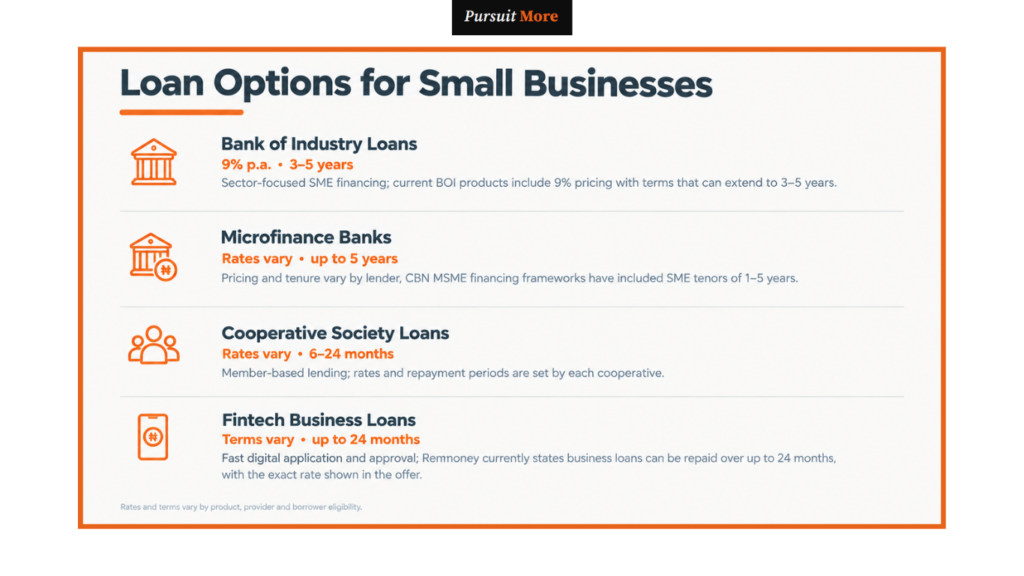
Government programmes are excellent, but they are highly competitive and tied to specific application windows. If you miss a deadline or do not fit the strict criteria for a government grant, your business journey does not end there. The private sector in 2026 has stepped up with financial products specifically tailored to nano and micro-businesses that traditional banks ignore.
Traditional commercial banks will rarely look at a micro-business because they demand heavy collateral like landed property in a high-brow area. LiquidCrest Microfinance Bank takes a completely different approach. They offer loans ranging from N100,000 to N10 million, specifically designed for small traders, artisans and service providers. Their repayment windows span 6 to 12 months.
Unity Bank also has the SHOCOF programme; The Shop as Collateral Facility (SHOCOF) by Unity Bank remains one of the most innovative financing solutions for everyday Nigerian business owners. This is especially great if you own or hold a valid long-term lease on a shop in a recognised market; Unity Bank will accept the shop itself as collateral for your loan. This bypasses the impossible demand for residential property documents. Instantly unlocking capital for traders whose primary asset is their physical retail space.
Grant Application Checklist: Preparation is Key
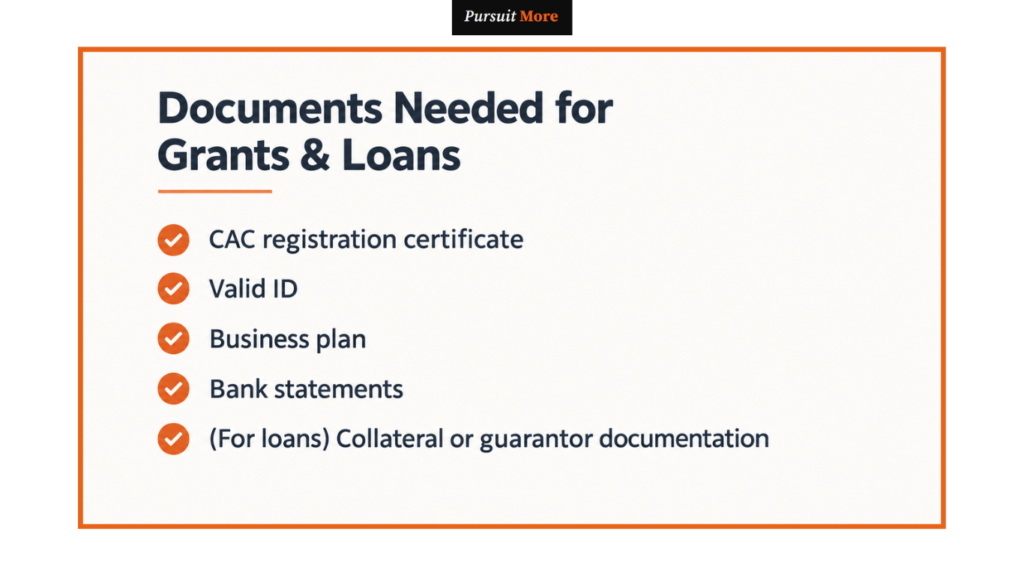
Whether you are applying for the N5 million grant from NiYA or the N200,000 YouthCred loan, there are things you need to be sure to verify and keep handy before you begin your application process. Some things you should check include:
- Do you have an active CAC registration
- Do you have a corporate bank account?
- Do you have a solid business plan? Emphasis on “solid.”
- Are your financial records organised?
- Ensure your application process is flawless
- Is your business employing other Nigerians?
If you can comfortably answer these questions and meet the above checklist to a reasonable confidence level. Then you should go ahead and apply for any grant that is in its active window.
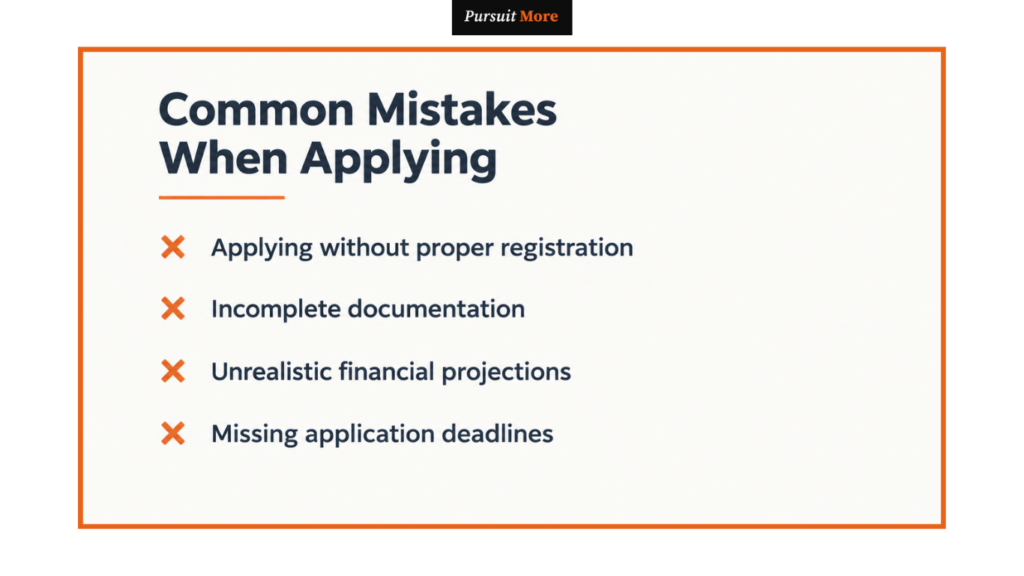
Ensure your application process is flawless by avoiding the common pitfalls that cause otherwise valid applications to be rejected.
Final Steps: Take Action and Secure Your Business Funding
Securing funding as a small business owner in Nigeria in 2026 is entirely possible. The grants are real, the zero-interest loans are active, the free registration is available, and if you don’t qualify for government grants, the private sector is also willing to step in. Your job is to step out of the shadows, formalise your hustle, prepare your documents and take your rightful place in the Nigerian formal economy.
Pro Tip for Applicants:
Most grant and loan providers in Nigeria require a clear financial projection and execution strategy. Before applying, follow our step-by-step guide on how to write a business plan in Nigeria to increase your funding chances.