Nigeria’s SaaS market is still in its infancy, with the average firm listed in the records having been founded just a few years ago, but not small. There are thousands of software-as-a-service products being tracked across the country, and new companies are coming to market at an established monthly rate. If you’re considering starting SaaS startups in Nigeria, thinking about where to invest, or looking to join the SaaS startup revolution, then the current state of SaaS in Nigeria is a sea of quick-moving, nascent businesses, beginning to take shape and form.
Let’s take a look at the structure of this market, its size and composition, what is the hard way learning, best SaaS companies in Nigeria, the companies to watch, and what it means from a different perspective to every stakeholder in the ecosystem.
Nigerian SaaS Market Growth 2026 and Market Size
There are 2239 SaaS products tracked in Nigeria, with approximately 21 new SaaS companies joining every month. The median age of the company is 5 years; the opportunity is still being mapped, and the ecosystem is not yet dominated by a few large players like more established SaaS markets. That’s the reason why market sizing is more important here than in the US or UK. The market’s fragmentation is still evident in a young market, and the businesses mentioned below are, in their own way, examples of founders filling the spaces early in the market.
What’s interesting is that the number of companies in the Nigerian SaaS market varies significantly based on how the numbers are calculated. Some trackers only count the companies that have raised funds and venture funding, while others take a broader view and scan the open web for any subscription-billed software product that returns an order of magnitude higher. That 2,239 number is on the more conservative side of the range. The reader will need to compare sources and verify what is being counted before relying on any given number as a fact.
Legal Compliance as a Competitive Advantage: SaaS Startups in Nigeria
While overall market size is a useful figure, market composition is often more revealing. Looking at where activity is concentrated in the Nigerian SaaS landscape shows two clear patterns.
First, this is primarily a business software market rather than a consumer one. Pure B2C SaaS companies that sell only to individual consumers remain a small minority. Most Nigerian SaaS startups sell to other businesses or to a mix of businesses and consumers. This is significant.
The founders building lasting software companies in Nigeria are largely focused on solving real operational problems for other businesses such as invoicing, payroll, inventory management, and compliance, rather than competing for consumer attention. For founders, investors, and job seekers, this is where the real centre of gravity lies, not in the more visible consumer-facing apps.
Second, three verticals clearly lead the market: invoicing and payment processing, learning and education, and payroll management. Each of these categories has well over a hundred tracked companies, far more than most other segments. This concentration reflects genuine local demand.
Payments and invoicing tools address the gaps in Nigeria’s still-fragmented banking and billing systems. Any business that moves money or issues invoices needs software that can handle inconsistencies, creating a durable and recurring need. Education software is driven by a large, underserved young population and gaps in formal education infrastructure. Payroll and compliance tools are gaining importance as regulatory scrutiny increases and more businesses move from informal to formal operations.
These are not verticals chosen by simply copying Silicon Valley trends. They have grown out of the specific needs of Nigerian businesses. For founders considering a new SaaS venture, the strongest “built-in-Nigeria” opportunities are concentrated in tools that support compliance, payments, people management, and payroll.
Infrastructure-First Product Design
Legal Compliance and Infrastructure in the Nigerian Market
Key Takeaway: Success for SaaS startups in Nigeria hinges on two non-negotiables: treating legal compliance as a core product feature rather than an afterthought, and engineering the software stack specifically for low-bandwidth networks and local payment rails.
Regulatory Compliance as a Competitive Advantage
The first thing that gets misrepresented in content about SaaS startups in Nigeria is how regulation is framed. While the instinct in free markets is to treat compliance as an operational burden to reduce, Nigerian tech lawyer Favour Chinaza Ibe contends that software businesses operating in or facilitating regulated industries are direct links in the regulatory chain. Failing to recognize this reality often leads to non-compliance, severe penalties, or sudden shutdown.
The trap many founders fall into is specific: they assume that because they aren’t traditional financial institutions, they aren’t subject to regulation. In reality, platforms facilitating payments, Know Your Customer (KYC) checks, salary advances, or health data processing are regulated by the Central Bank of Nigeria (CBN) and other government bodies.
Fintech isn’t just a software category—it carries regulatory obligations. Features involving salary disbursement, tax withholding, and user identification fall under regulatory supervision regardless of intent.
Practical Legal Guidelines for Founders:
- Map Industry Regulations: Thoroughly audit the regulatory framework governing your specific market vertical early on.
- Align Billing with Legal Standards: Ensure recurring payment structures comply with national banking and data protection laws.
- Secure Licensing Early: Identify clear licensing paths during product development instead of treating them as post-launch tasks.
- Draft Credible Contracts: Incorporate legally sound contracts into your core growth and enterprise sales strategy.
- Adopt a Legal-First Mindset: Treat compliance readiness as a key commercial differentiator.
For SaaS startups in Nigeria, built-in compliance simplifies enterprise and financial-sector sales by eliminating uncharted regulatory risks. It also streamlines venture funding, as investors increasingly scrutinize legal readiness before committing capital.
Infrastructure-First Product Design for SaaS Startups in Nigeria
The second major lesson is that global SaaS platforms built for high-speed broadband frequently fail when deployed in Nigeria. Tolu Adesina, CEO of Zirro and former Product Director at Moniepoint, highlights the core limitation:
“Connectivity is the major problem. We can’t assume internet users have a stable network. The product has to be fast and capable of withstanding poor internet connections.”
Network stability is not a minor UX concern—it is an architectural requirement that impacts the entire technology stack. Successful platforms rely on aggressive local caching and graceful degradation when connections drop mid-transaction.
Many imported SaaS products fail locally because they assume stable internet, USD pricing, and card-based checkout flows. Adesina notes:
“It’s a context problem; we’re using tools built for environments we don’t operate in. Nigeria also has a divided payments system; we must integrate local payment rails because that’s how customers actually pay.”
The most resilient SaaS startups in Nigeria are not simply rebranding Western software with Naira price tags—they are architecting products tailored to local regulatory exposure and network infrastructure.
Companies to know
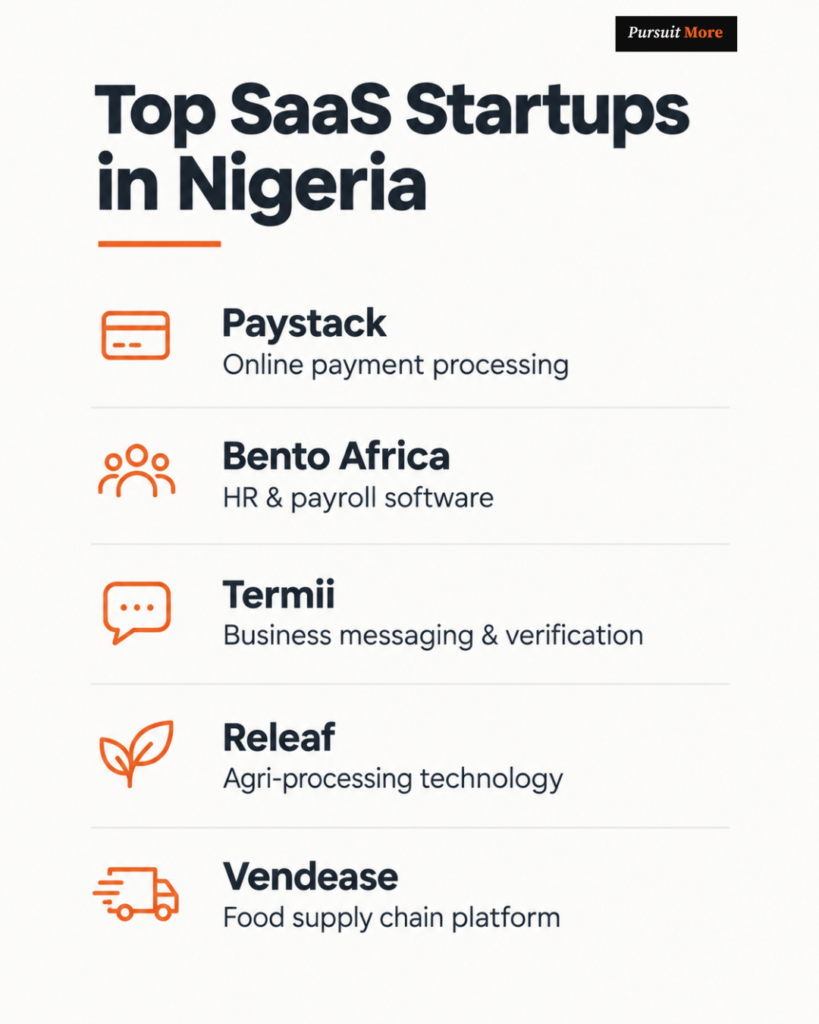
Some newer competitors are representative of the “built-in-Nigeria” thesis, with each taking on one of the above concentrated verticals.
Profitaa fills the gap in compliance that is created by disparate data in SMEs’ inventory, payroll and CRM tools, while co-founder Kelvin Aghayedo terms the product, targeting fragmented SME data, adding that there is an automated VAT and withholding tax reporting feature based on the Nigerian tax regulations and IFRS and Nigerian GAAP standards. It is a good case of compliance-as-product and not compliance-as-afterthought.
Zirro, the venture of Tolu Adesina, is a unified operations suite, which covers sales, inventory, payments, customers and logistics, and has been designed specifically to address the payments-fragmentation and connectivity challenges highlighted above.
Flowmono’s focus is in the e-signature and document-workflow arena, which is a hot space for businesses to be more relevant as more businesses in Nigeria are switching from physical signatures to digital ones.
Siiqo falls under the commerce-tooling category, which is in the wider category of platforms that are assisting Nigerian merchants to conduct both online and offline sales with a single platform.
Bumpa is the market’s clear example of a company that went from SMB tooling to enterprise. It started with a mobile app that helped small merchants create websites and manage inventory, passed through Y Combinator in 2022, and, after realising that the most valuable data was in the unstructured social-media messages, was rebuilt as an AI platform to “convert unstructured social media messages” into “structured sales pipelines” for larger clients.
It is a trend to keep an eye on one potential route for Nigerian SaaS businesses to expand beyond SMEs, which currently make up the bulk of the market.
Infrastructure and Billing Trends
The market is changing the way infrastructure and billing are done.
Two trends in structure should be noted by those who are following this space in the coming years. AWS and Azure continue to be the preferred cloud service options for Nigerian SaaS, and there is an increase in hybrid cloud adoption, especially among banks and healthcare organisations that want to ensure sensitive data stays compliant with local regulations, but also want to reap the benefits of performance and scalability that public cloud services can provide. The hybrid pattern is gaining traction in other regulated industries with rising data-localisation pressure.
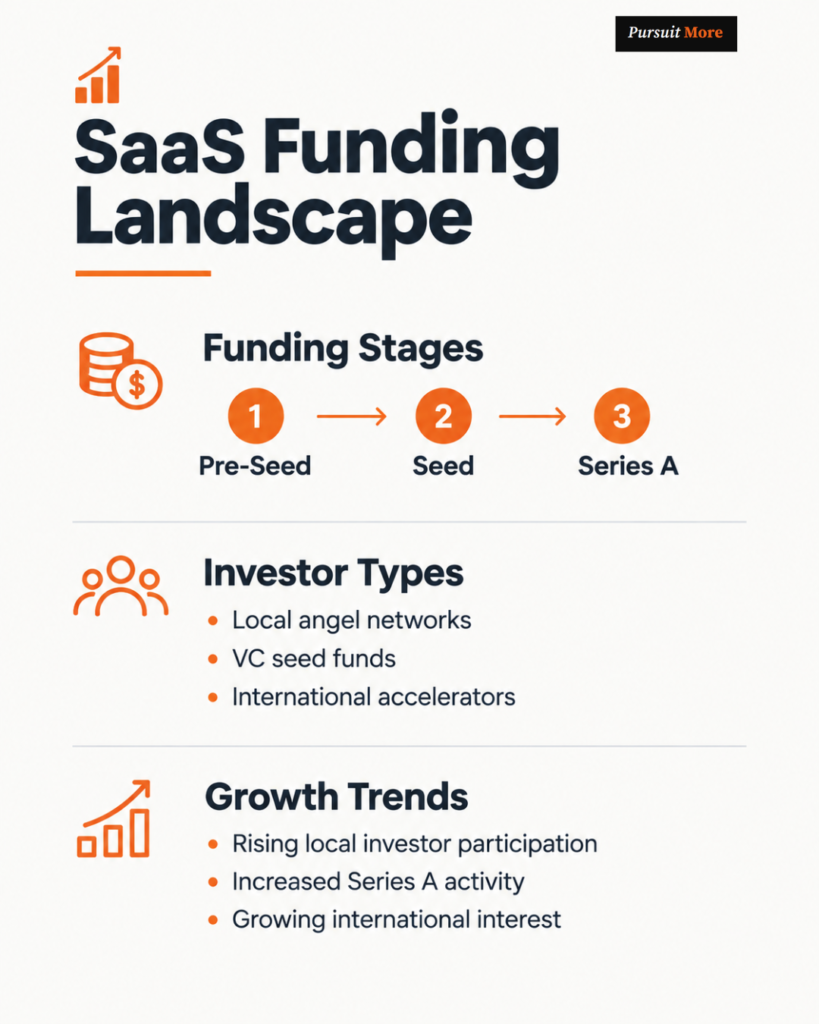
In fact, the whole Nigerian payment infrastructure has been a significant contributor to this change, from one-off custom software initiatives to recurring income SaaS payments, with payment service providers like Paystack and Flutterwave making it easier to make payments in Naira. This is an important precondition for the entire market: Nigeria’s payments layer has now fully grown up to make small, recurring payments cost-effective and reliable, which SaaS as a business model relies on.
What this means depends on where you sit.
For aspiring founders, the market trends towards emerging adjacencies inside the dominant verticals; for example, invoicing, education, and payroll are crowded, but have pockets that can allow a product built primarily for compliance and a network-agnostic approach to succeed.
Investor users of the concentration data, for example, should not be fooled into thinking that the founders with little or no B2B-and-hybrid activity might not be putting themselves at risk, as the best operators in these markets have learned to manage around regulatory risk. For those seeking a new position, the expanding list of companies shifting from SMB products to ones that are enterprise-grade and compliant, such as Profitaa, Zirro and Bumpa, is where hiring will focus in the coming years as they scale their operations, compliance and enterprise sales.
Nigeria’s SaaS story is no hype. It’s a really big market, and the script that’s working best for these interesting companies is price and bill locally, treat regulation as the competitive advantage, and it’s all built for weak networks. The playbook’s founders, investors and job seekers are now getting a real leg up on a market that is still being written.
As the ecosystem grows, the winners will be those who see local context as not a hurdle to code around, but as a key architectural need that is the basis of their moat.
Ready to act on this? If you’re building a SaaS business plan, get a Full Application Audit before you pitch. If you’re job-hunting in Nigeria’s SaaS ecosystem, get your CV reviewed for SaaS-specific roles, or browse current openings on our Jobs board. And for the broader Nigerian entrepreneurship landscape beyond SaaS, see our entrepreneurship in Nigeria guide.