Harvard Scholarship for Nigerian Students 2026: Full Ride Proven Guide
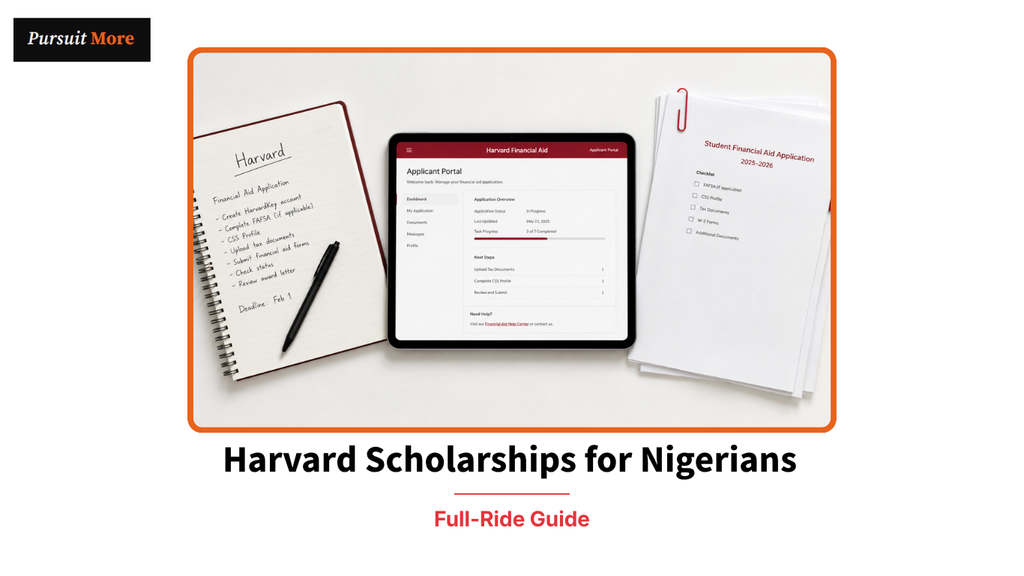
Securing a Harvard scholarship for Nigerian students 2026 might seem financially out of reach at first glance, but the price tag should never stop you from applying.
Harvard uses a need-based admission policy for international students, providing financial assistance tailored specifically to what your family can afford. Your financial background will not hinder your chances of admission, and if accepted, Harvard will cover the remaining costs you cannot afford.
This guide breaks down how Harvard funding works across undergraduate, MBA, and PhD or Postdoctoral programs so you can navigate your application with confidence.
Harvard’s Need-Blind Admission Policy for International Students
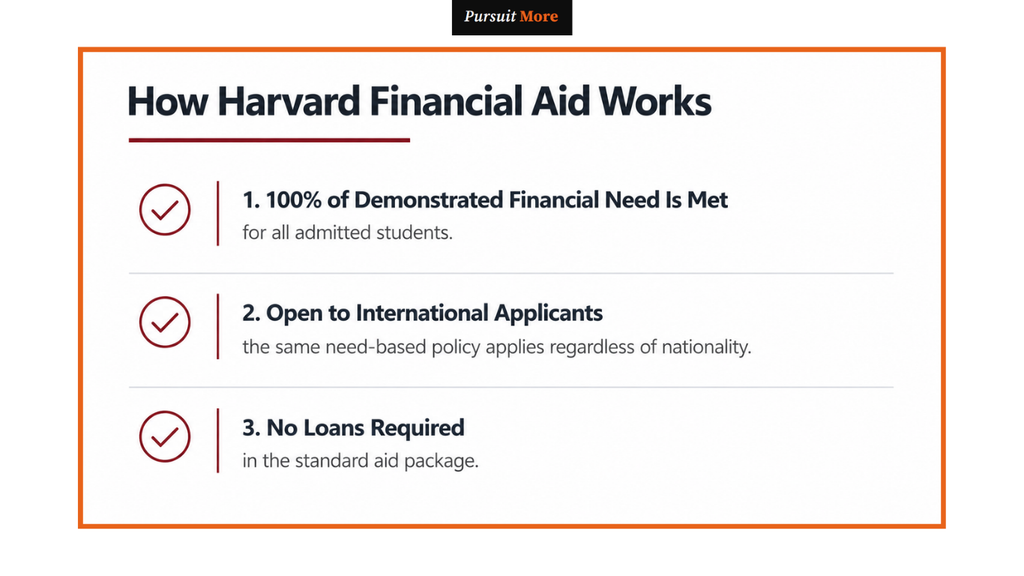
How Harvard Financial Aid Works.
Applying to Harvard and getting accepted is one of the most competitive academic processes in the United States with a 4% acceptance rate but this hasn’t stopped thousands of applicants from giving it a shot.
If you’re thinking about applying and the cost is more than what your family can afford, Harvard’s need-blind admission policy can ease that pressure.
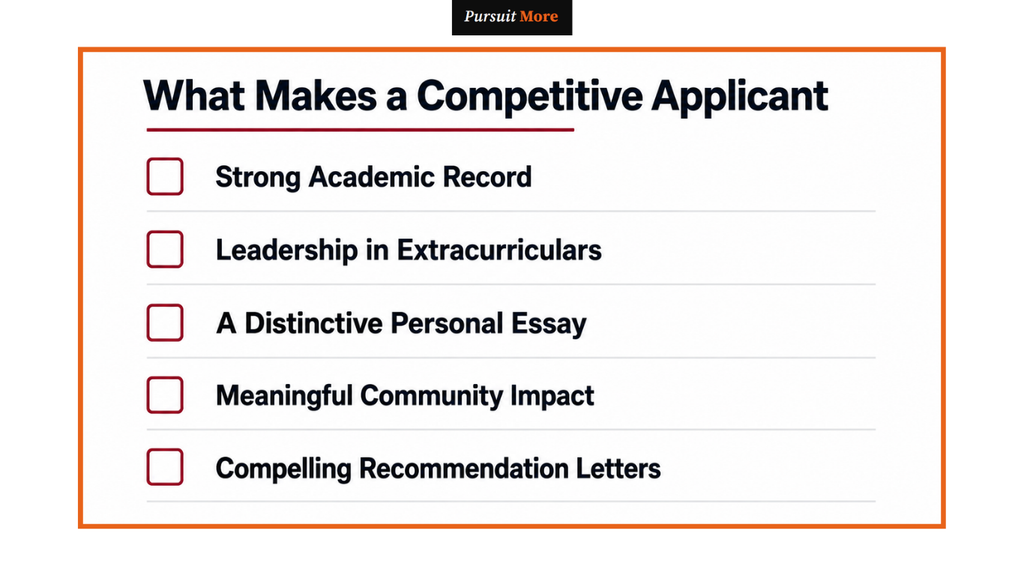
What Makes a Competitive Applicant.
What is need-blind admission policy? In simple terms, this policy means that whatever your financial status is, it will have minimal consequences on your admission if you decide to apply to Harvard if you’re not financially stable. The institution doesn’t assess your financial history or whether you’ll need financial aid at some point during the program when reviewing your application.
It simply assesses your application based on your academic and extracurricular records. If you’re thinking about how to get into Harvard from Nigeria, Argentina, Japan, or anywhere around the world, applications are assessed the same way — based on your academic credentials and personal factors.
Harvard is part of the small circle of American universities — Yale, Princeton, MIT, Amherst, and Dartmouth, etc — that have need-blind admission in place for their international students, instead of having a policy open to U.S. citizens only.
However, your financial status is not completely ignored. Once admitted, your family’s financial status is closely assessed to determine the exact structure of your aid package.
Harvard meets 100% of demonstrated financial need entirely through grant-based assistance and campus work options, ensuring a Harvard scholarship for Nigerian students 2026 provides full tuition coverage without mandatory student loans. While optional loans exist for personal costs or replacing self-contributions, borrowing remains entirely separate from Harvard’s core need-based financial package.
What Full-Ride Financial Aid Covers at Harvard: Harvard scholarship for Nigerian students 2026
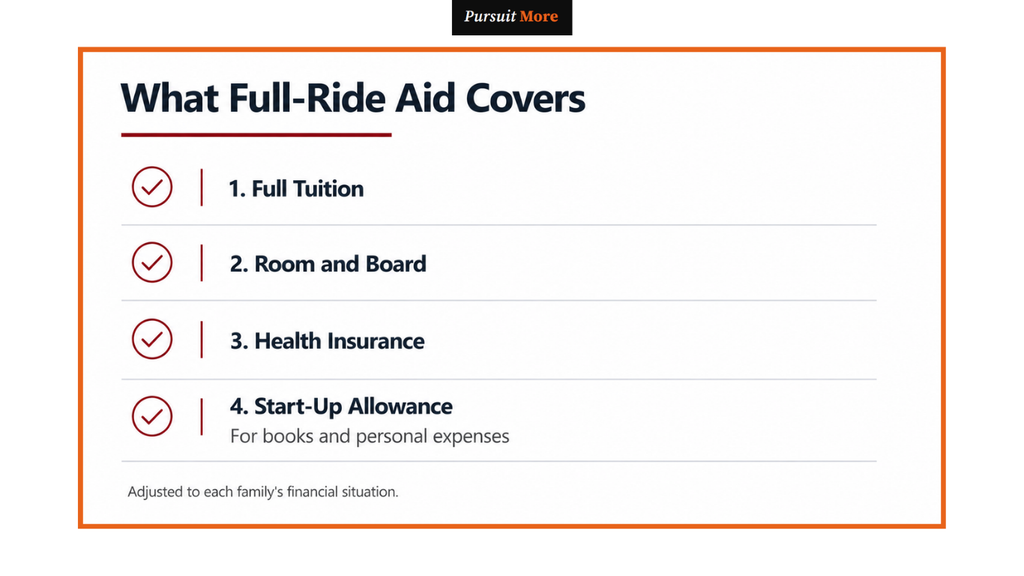
What Full-Ride Aid Covers.
Harvard’s financial aid levels starting from the 2025/2026 academic session and how they work:
- Students from families that earn $100,000 or below in annual income and typical assets: Harvard covers the entire cost of attendance, as well as tuition, housing, food, health insurance, and transportation from home to campus and vice versa. Students who fall into this category also get a $2,000 Start-Up Grant in their first year and another $2,000 Launch Grant in their junior year. The aim behind handing out these grants is to help the students cover the costs of things like buying a laptop, moving to campus, starting an internship, and preparing for life after graduating from Harvard.
- Students from families that earn $200,000 or below in annual income and typical assets: Tuition is paid for by Harvard. While certain expenses like housing and food, may depend on their individual family’s current financial status. Students do not need to take out loans.
- Students from families that earn over $200,000 in annual income and typical assets: Students from families that fall into this category can still receive financial aid. The $200,000 figure is not used as a cutoff mark by Harvard for financial aid. Instead, financial aid depends on certain factors like the student’s family’s income, assets, family size as well as the number of college kids in the family. Many students from families that earn over $200,000 are still eligible to receive financial aid.
One detail worth mentioning is that federal FAFSA doesn’t always include the value of the family’s primary residence when assessing if a student needs financial aid. However, many institutional formulas that still use the CSS Profile may consider including it.
Also, the financial-aid application process for fully funded Harvard scholarships for international students are quite different. They are not required to submit the Free Application for Federal Student Aid (FAFSA), which Harvard requires from U.S. citizens, permanent residents, and other eligible non-citizens. Instead, they will submit the CSS Profile or Financial Statement for Students from Foreign Countries — an alternative provided by Harvard, if there are payment or internet problems with the CSS Profile.
Aside from this, the rest of the application process for the need-blind admission policy is the same; Harvard determines the package the student will get after assessing their family’s financial situation.
Harvard Undergraduate Scholarships and Application Requirements
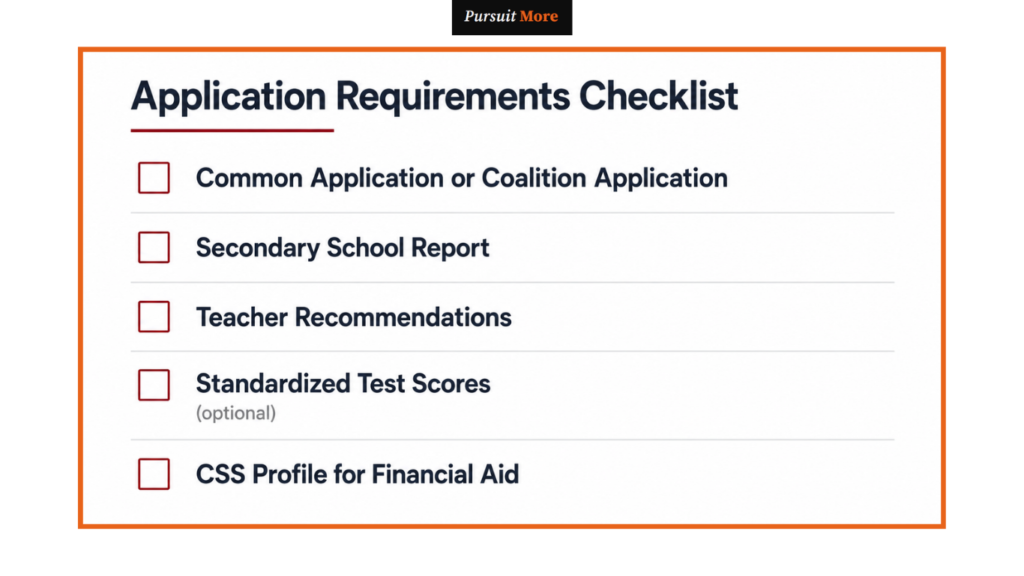
Standard testing requirements for each year may vary but Harvard requires its applicants to have SAT or ACT scores except in certain cases when these tests cannot be accessed.
Always go through Harvard’s official admissions website to check for the current testing rules before applying because they’re susceptible to change often.
If you’re applying for the Harvard financial aid package as an international student, you’ll need to have:
- CSS Profile: Harvard’s detailed financial aid application for international students. Include Harvard as a recipient with the code 3434.
- IDOC: College Board’s Institutional Documentation Service — supporting financial documents are uploaded here.
- Common App or Coalition App: Your main application for admission into Harvard goes through either of them.
Key Application Documents and Financial Aid Platforms
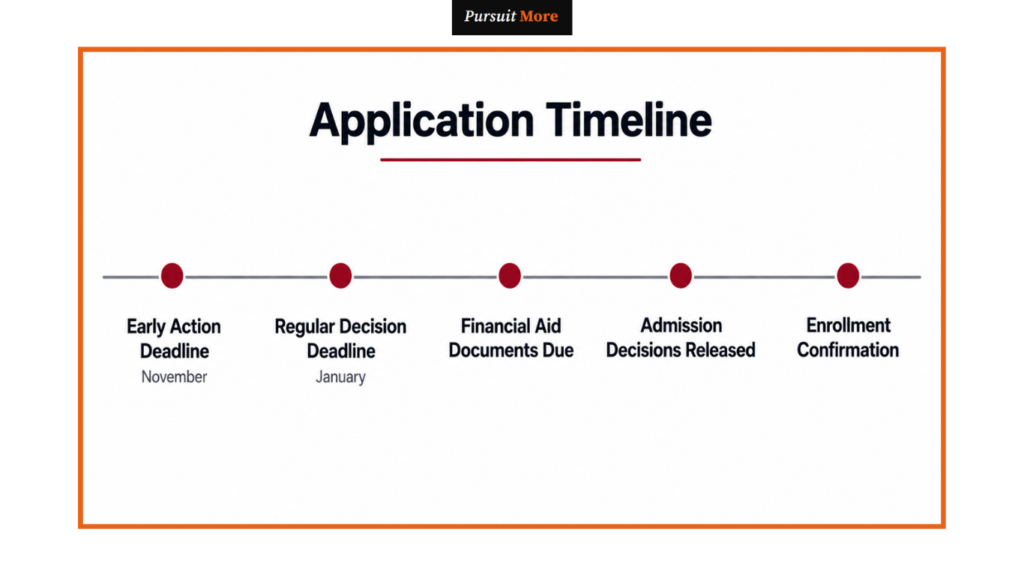
- Early Action — 1st of November
- Regular Decision — 1st of January
However, before you apply, go through Harvard’s website and verify the current deadlines because dates can change.
Harvard may exercise the option of offering alumni interviews to its admitted or shortlisted applicants. These interviews are usually done by any Harvard graduate living anywhere near you. The interview is usually an informal affair, but it is important that you treat it with seriousness and see it as an evaluation. It can end up becoming part of your application.
Harvard MBA Scholarship Options for Nigerian Candidates
For Nigerian applicants who are making plans to study for the two-year MBA at Harvard Business School, there are two standout yet different funding options worth exploring.
1. The 7UP Harvard Business School Scholarship
The 7UP Harvard Business School Scholarship is explicitly for Nigerians. Since 2010, Seven-Up Bottling Company has been awarding one fully funded scholarship every year to a Nigerian who has gained admission into Harvard Business School’s MBA program. The scholarship covers tuition, accommodation, and flight expenses between Nigeria and the United States.
The most essential part is understanding and following the right sequence of the scholarship process:
— Firstly, you apply to Harvard Business School and gain admission through its standard MBA application process.
— Secondly, after gaining admission, you apply for the 7UP scholarship program with it.
After the application closes, Seven-Up Bottling Company assesses all submitted applications, and shortlisted applicants are invited for interviews with the company’s executives before a single applicant becomes the recipient of the scholarship.
Basically, the 7UP scholarship isn’t a means or a shortcut to gain admission into Harvard Business School’s MBA program. To win the scholarship, you must have gained admission first.
The Boustany Foundation HBS MBA Scholarship
The Boustany Foundation MBA Scholarship is not explicitly for Nigerians only. Although the foundation prioritizes applicants of Lebanese descent, the scholarship is open to Harvard Business School MBA students from all countries.
The scholarship isn’t awarded every year, but every two years. The next scholarship that will be awarded is for students who will be starting their Harvard Business School MBA program in the autumn of 2027. The deadline for application is slated for the 31st of May, 2027. The scholarship isn’t a fully funded one — it covers 75% of tuition, a mandatory two-month internship program in Monaco with the cost of travel and accommodation expenses during the internship covered.
It is worth giving it a shot and applying if you’ve already gotten admission into Harvard Business School. But it is important to mention that it is a global scholarship, not one specifically for Nigerian students only.
Harvard PhD and Postdoctoral Fellowships for African Researchers
The Harvard Academy Scholars Program
The Harvard Academy Scholars program is an in-person postdoctoral fellowship for recent researchers whose work combines a social science discipline with regional expertise outside the United States and Canada. Every year, between five and six Academy Scholars are named for two-year in-residence appointments with an annual stipend of $80,000 and an annual research support of $6,000 included as well. The two-year program is expected to be completed within a three-year window.
Researchers focused on topics in Nigerian politics, African politics, economics or development are eligible for the program.
The application for this current window closes on the 18th of September, 2026 at 11:59 p.m EDT. If you’re interested in applying for the program, you must keep this deadline in mind.
The Kistefos African Graduate Public Service Fellowship
The Kistefos African Graduate Public Service Fellowship based at Harvard Kennedy School is another scholarship worth giving a shot. It isn’t open to applicants from every African country. Only applicants from Ethiopia, Ghana, Liberia, Nigeria, South Africa, and Tanzania.
The Kistefos fellowship covers tuition, fees, and living expenses for students who are eligible for Harvard Kennedy School and executive education participants. However, slots are competitively fought for and the fellowship prioritizes applicants that are committed to championing democracy through public service, NGOs, and government offices.
There is also a non-negotiable requirement: recipients of this fellowship must be willing to commit a minimum of three years working in the public service system after they’ve completed their program. The fellowship isn’t just built on financial needs, it also plans on funding applicants who are willing and committed to public service. You must first be accepted into an eligible Harvard Kennedy School program before you become qualified to apply for the Kistefos African Fellowship.
Real Examples: Nigerian Students Who Secured Ivy League Funding
In 2024, 17-year-old Oluwafemi Ositade, a student of The Ambassadors College, Ota, Ogun State, Nigeria, received 14 scholarship offers from different schools in the United States, Canada, and Qatar worth about $3.5 million combined.
He did this on the back of impressive results – 800/800 in SAT math, 760 in reading and writing, and a 4.0/4.0 college CGPA.
One of his offers came from Harvard – a $375,000 scholarship. Aside from Harvard, he also received an offer from another Ivy League university; Brown. Other offers came from Duke, Wesleyan, Carnegie Mellon’s Qatar campus, the Universities of Miami, Howard, Stetson, Fisk, Drexel, and three University of Toronto campuses.
What makes Mr. Ositade’s scholarship story special isn’t just the Ivy League offers. It is that a student studying in a Nigerian secondary school with zero history of schooling in the U.S can have an academic pedigree that can attract major scholarship funding from Harvard.
Ashley Adirika, a 17-year-old Nigerian-American student from Florida, was accepted to all eight Ivy League schools as well as Stanford, Vanderbilt, Emory, and other universities. The combined worth of all scholarship funding she received was about $4 million.
Her story is a good example of why students shouldn’t reject the idea of applying to top universities because they believe they have zero chances of making it through. Ms. Adirika did not shy away from applying to some of the best schools in the world, she went through with her applications and let them determine her chances instead of limiting herself and her options.
She has admitted to crying on Ivy Day after getting her acceptance notifications. The story is less about the money but more about how unexpected the offers she received were, despite the fact that she had a strong academic and extracurricular record to justify them.
Mr. Ositade and Ms. Adirika’s story highlights the same thing; having a strong academic and extracurricular record can get you into the best universities, and Harvard’s need-blind admission policy and financial aid can lessen the financial impact of studying at Harvard for an eligible Nigerian student.
Alternative Funding Pathways: The Fulbright Foreign Student Program
The Fulbright Foreign Student Program, sponsored by the US Embassy in Nigeria is not the same as a Harvard scholarship, but it is an alternative funded scholarship for Nigerians.
It is explicitly for Nigerians who have spent at least two years in a PhD program at a Nigerian university or research institute. The program covers funding for doctoral research at a U.S. institution.
Getting a Fulbright award does not mean you’ll be getting into Harvard, you can be sent to another U.S. university or research institution.
The 2026/2027 application window for this program closed on the 1st of June, 2026, for Nigerians.
Looking forward to the next window, if you are a Nigerian PhD student, you may want to explore this option alongside Harvard’s financial aid for international students. You can check the U.S Embassy website for information on the next application window.
However, it is not a shortcut to get into any of Harvard’s undergraduate, MBA, or PhD programs.
Key Takeaways for Nigerian Applicants in 2026
Reviewing all three Harvard pathways, one common denominator emerges: the cost of studying abroad does not have to be the biggest obstacle. Instead, securing admission should be your primary focus.
Harvard determines financial aid based on evaluated family need rather than total bank balances. Whether you are applying for undergraduate funding, the 7UP MBA Scholarship, the Academy Scholars Programme, or the Kistefos Fellowship, discovering a fully funded Harvard scholarship for Nigerian students 2026 is attainable. Your main objective should be building a standout application package that maximizes your chances of acceptance.
Some students use side-income strategies while preparing applications — see our practical guide on how to make money with AI in Nigeria.
Frequently Asked Questions
Does Harvard offer a fully funded scholarship for Nigerian students in 2026?
Yes. Harvard provides 100% need-based aid for admitted international undergraduates, ensuring a Harvard scholarship for Nigerian students 2026 covers tuition, housing, and travel for families earning under $100,000 annually. Postgraduate options like the 7UP HBS Scholarship offer similar full funding.
Is there a separate application for a Harvard scholarship for Nigerian students 2026?
No. Undergraduate candidates applying for a Harvard scholarship for Nigerian students 2026 simply submit the standard Common Application alongside the CSS Profile (code 3434) and supporting income documents.
How do family income levels affect a Harvard scholarship for Nigerian students 2026?
Harvard guarantees zero mandatory loans:
- Under $100,000: 100% covered tuition, room, board, and start-up grants.
- Up to $200,000: 100% tuition coverage.
- Above $200,000: Need-based aid tailored to family size and assets.
Does requesting aid hurt my chances of getting a Harvard scholarship for Nigerian students 2026?
No. Harvard maintains a need-blind admission policy for international applicants. Applying for a Harvard scholarship for Nigerian students 2026 has zero negative impact on your admission decision.
Related Career & Application Resources
For a broader overview of funding opportunities available to Nigerian students, see our complete guide on postgraduate scholarships in Nigeria 2026. or get direct feedback on your essays through Pursuit More Coaching Services.